Join our mobile Rapid Response Network!
You can be the first to hear about how we’re going to hold this administration accountable and how you can fight back for wildlife!
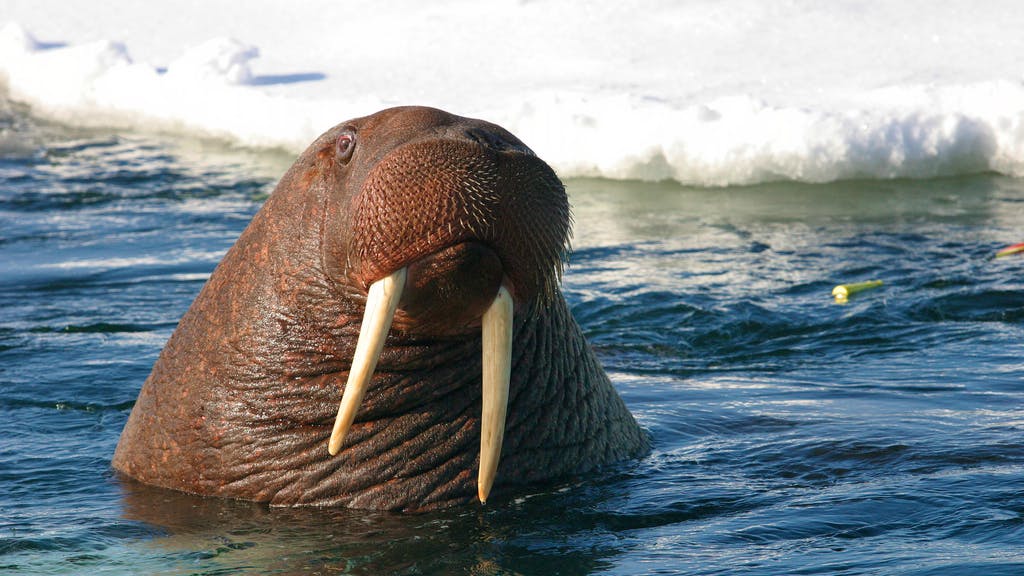
Walrus use their mighty tusks to forage and lift themselves up onto sea ice. Their scientific name,
Odobenus rosmarus, means 'one that walks with teeth'.
Why are Pacific Walrus imperiled?
The Arctic is warming at twice the rate of anywhere else on Earth. The biggest threat facing walrus today is the loss of stable sea ice due to climate change. As a result of less sea ice, walrus are changing their behavior.
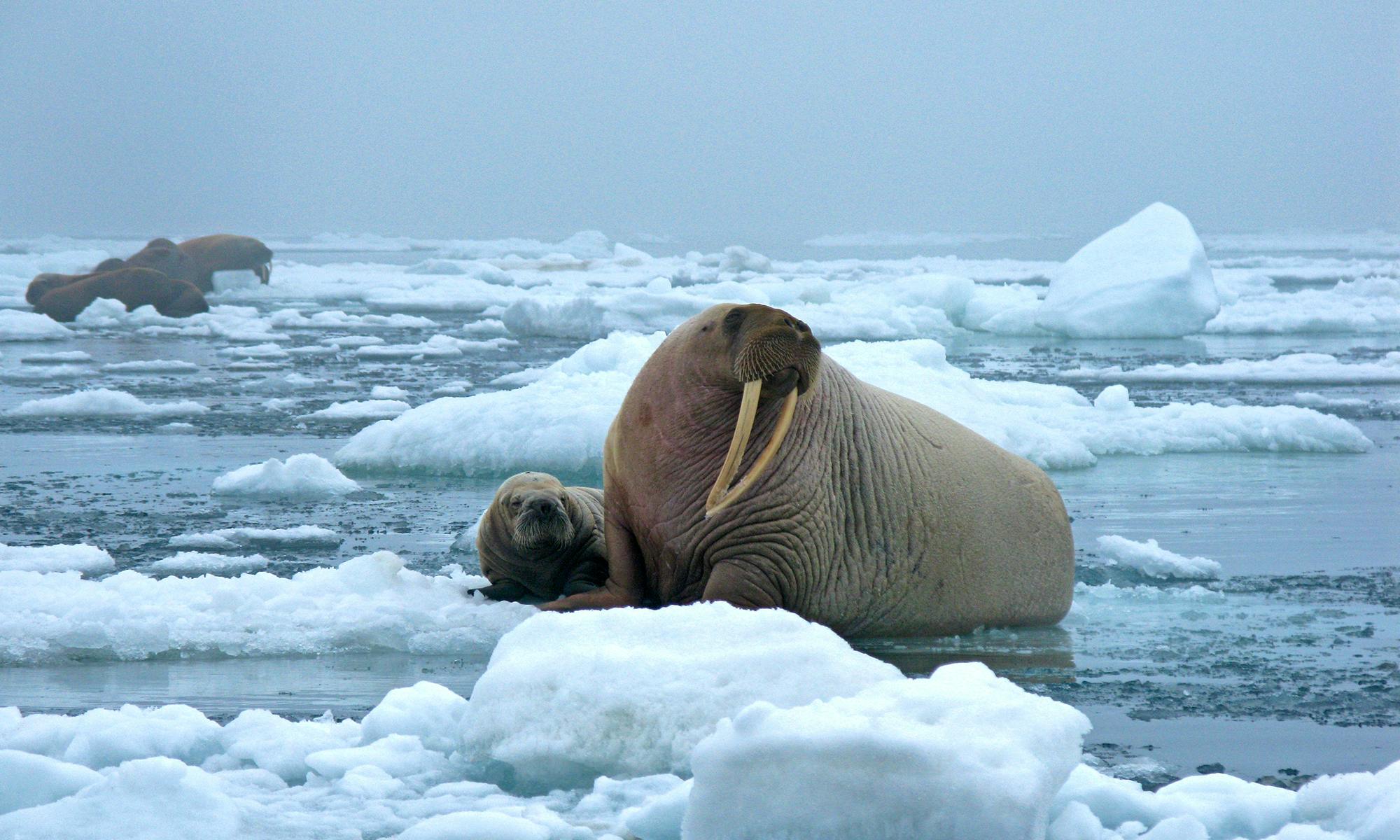
Walrus feed on the ocean floor in the relatively shallow waters of the continental shelf, where the sea ice itself sustains a rich food web. Females will leave their young on the sea ice while they forage, then haul out to nurse. The accelerating retreat of sea ice puts the newborns’ safe haven farther away from the mothers’ food, meaning longer, more exhausting swims for the mothers and more time alone for the calves.
Walrus are also seeking haul-outs on beaches, instead of ice, which puts them in closer proximity to sources of human disturbance. Walrus are known to stampede when disturbed. These stampedes can result in mortality.
Warming conditions allow for more vessels to make the journey into remote ecosystems that were once largely inaccessible. With more vessels in Arctic waters, the threat of an oil spill impacting wildlife seems all but inevitable. Additional ships increase noise pollution, ship strikes, pollution from ballast water and entanglement in marine debris, as well.
Climate change and the loss of sea ice, human disturbance due to oil and gas development, increased shipping and oil spills.
Identified as a candidate for listing under the Endangered Species Act, but the U.S. Fish and Wildlife determined in October 2017 the Pacific walrus did not warrant listing.
The walrus is listed as data deficient on the IUCN red list.

Defenders' Impact
While climate change will continue to make life harder for walrus in the Arctic, Defenders of Wildlife is working to protect habitat, bolster spill response, mitigate climate change and defend the Marine Mammal Protection Act. We are fighting for the protection of Arctic Ocean and Arctic National Wildlife Refuge and National Petroleum Reserve – Alaska habitat.
What You Can Do
Reduce your greenhouse gas emissions to help moderate climate impacts. Vote to elect politicians who aim to curb our nation’s greenhouse gas emissions. Support Defenders’ work to save imperiled species and the habitat they need to survive.
About
The Pacific walrus range is expanding. They are found in the Bering Sea, as far south as the Bristol Bay area, and the Chukchi, Beaufort, East Siberian and Laptev Seas.
More than 200,000.
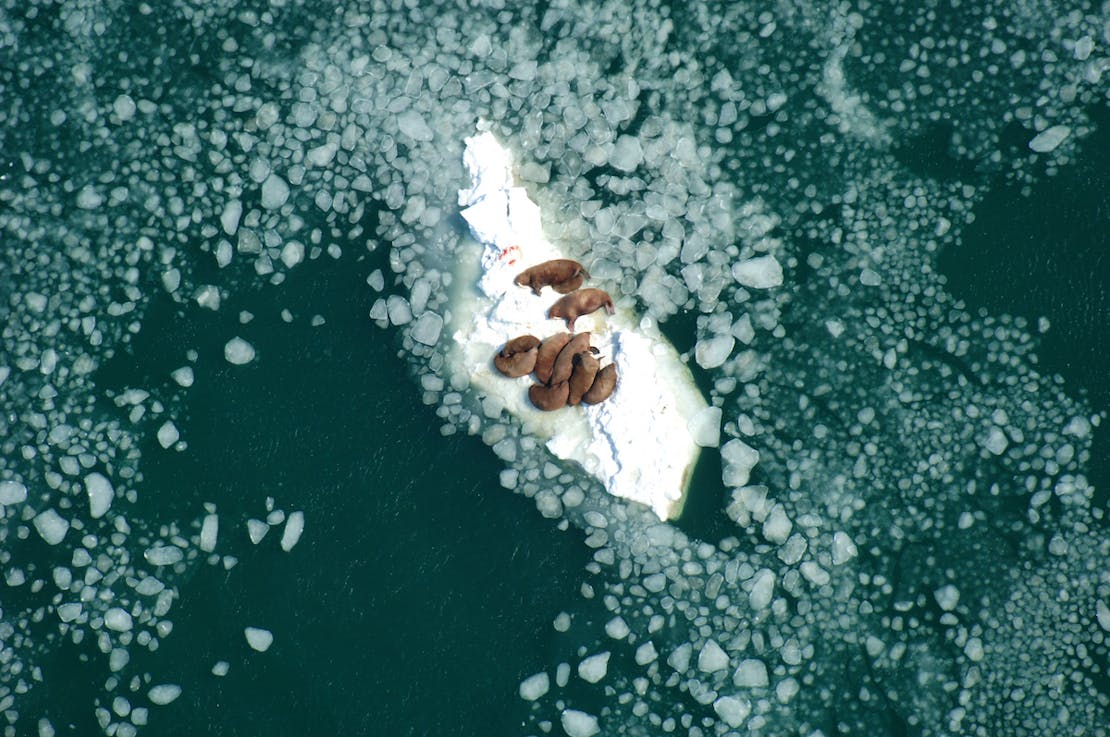
Walrus are very social animals and congregate in large numbers. They haul out in herds and males and females form separate herds during the non-breeding season. They establish dominance through threat displays involving tusks, bodies and aggression.
Walrus population growth rates tend to be slow, with mature females producing a calf on average every 3 years.
Mating Season: December to March
Gestation: 15 to 16 months
Number of Offspring: 1 calf, though twins have been recorded
Walrus staples include clams, mussels and other benthic (bottom dwelling) organisms they locate using their whiskers. They are also known to eat carcasses of young seals when food is scarce.
Featured
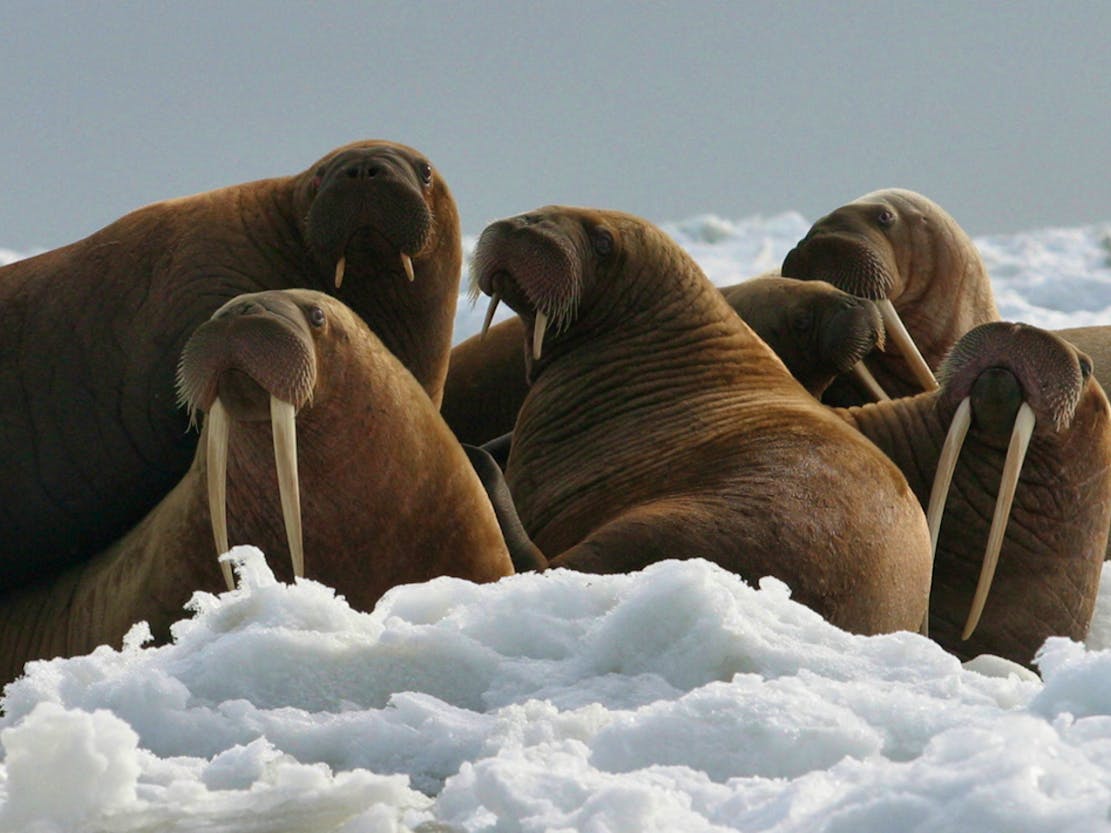
A Huddle of Walrus Facts
Huddle up and read on for seven fun facts about Pacific walrus. There may be some that surprise you!
Publications
Read More About the Pacific Walrus
News