Join our mobile Rapid Response Network!
You can be the first to hear about how we’re going to hold this administration accountable and how you can fight back for wildlife!
Defenders works in western deserts and Florida to protect imperiled species of tortoise.
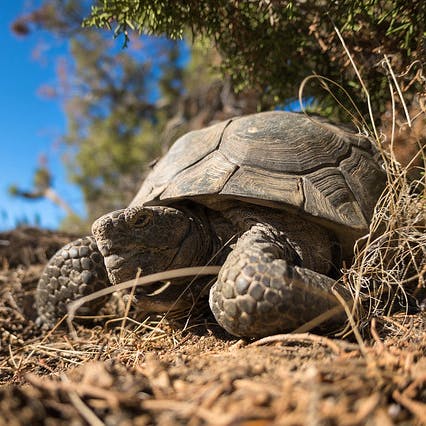
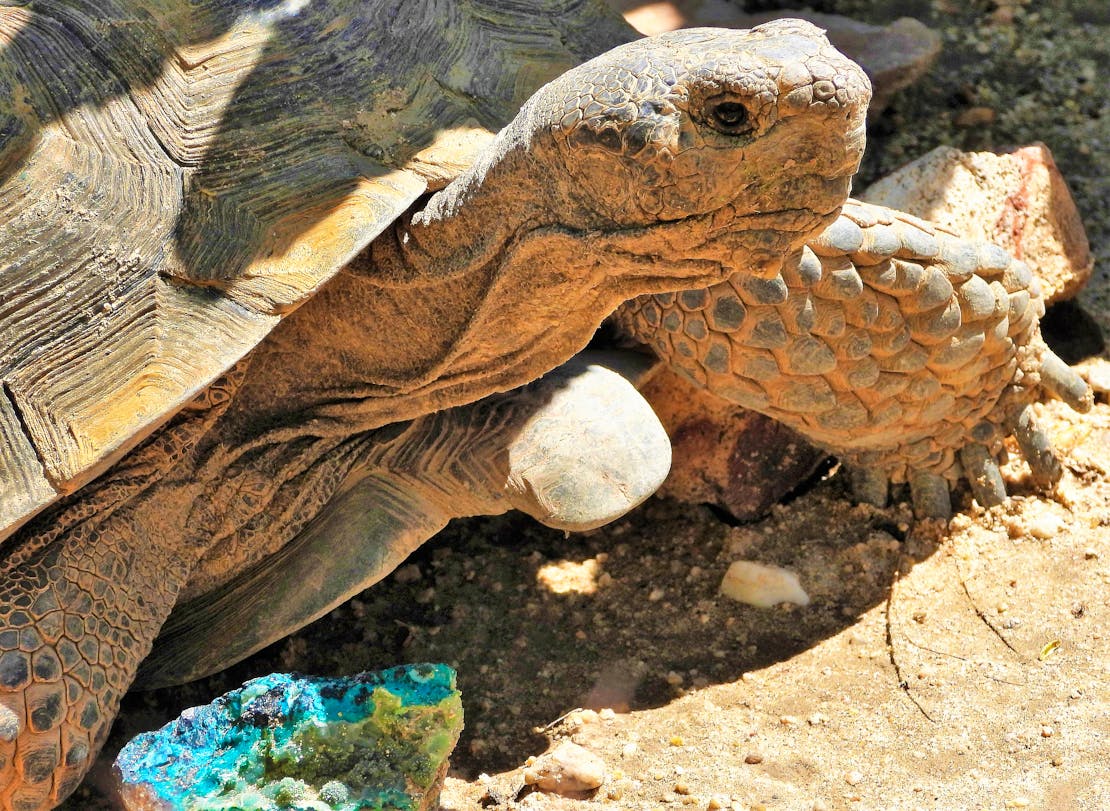
Agassiz’s desert tortoises have a high domed shell, which is usually brown in adults and dark tan in younger adults. Their powerful limbs are equipped with claws to dig underground burrows, which provide refuge from extreme heat and cold, and their front limbs are protected with a covering of thick scales that help deter would-be predators.
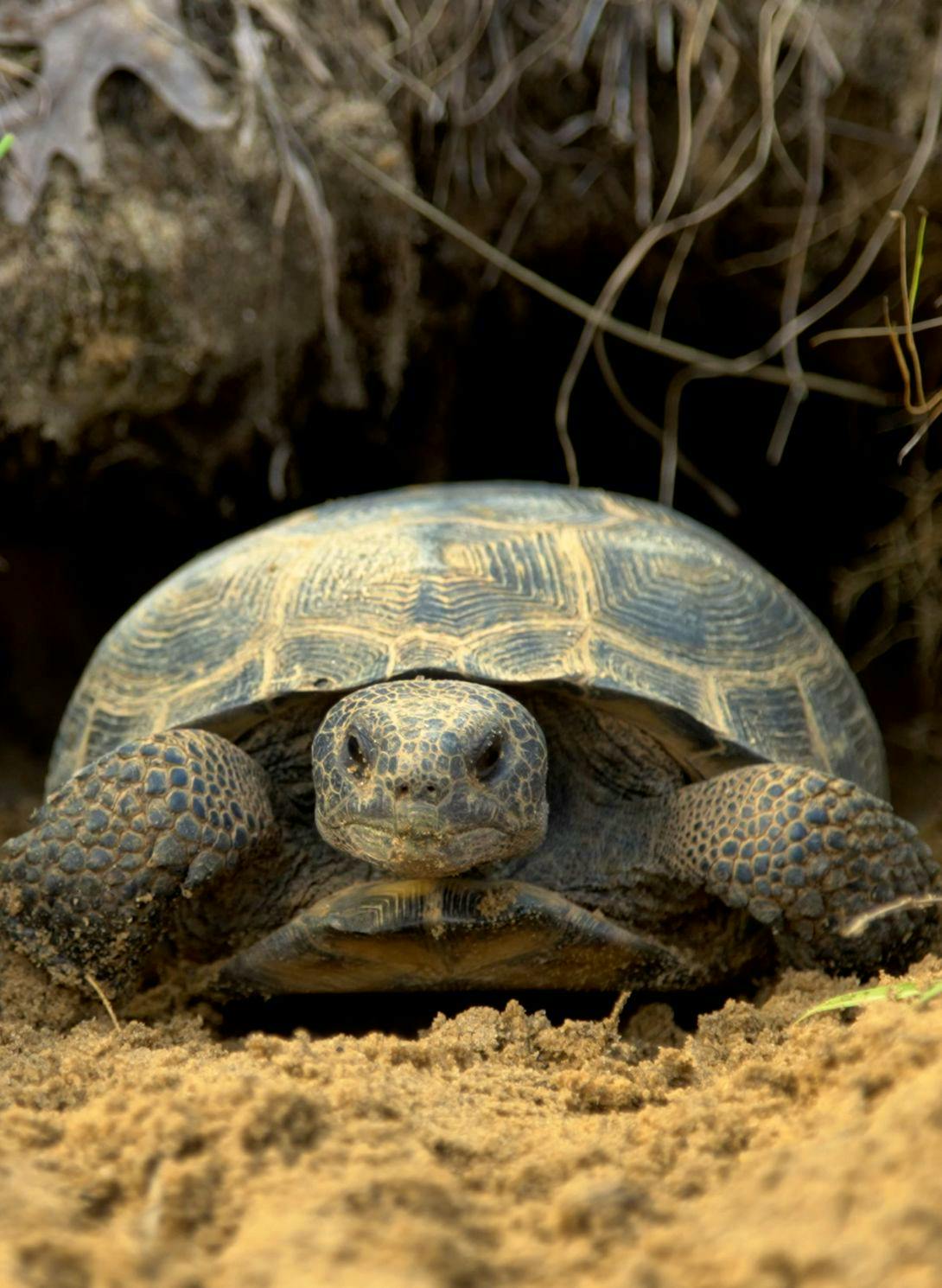
As adults, gopher tortoises are mostly brownish gray with a yellowish, tan underside. Gopher tortoises are so named because they dig large, deep burrows with their shovel-like front legs. These burrows provide shelter for 360 other species of wildlife, making gopher tortoises a keystone species with a pivotal role to play in their native community. Without the gopher tortoise, many of these species would not have a home or would not exist.
Agassiz’s desert tortoise are threatened by habitat loss and human disturbance, renewable energy development, invasive species, climate change and disease. Gopher tortoises are threatened by habitat loss, incompatible forest management, disease and illegal hunting for food.
Defenders' Impact
Because of threats to the species, Defenders helped to get Agassiz’s desert tortoise listed as a threatened species under the Endangered Species Act in 1990 and critical habitat designated in 1994. Defenders has challenged many federal, state and local government agency programs and that allow excessive human activity and development in Agassiz’s desert tortoise habitats and rallied our supporters to do the same.
We continue to oppose excessive and improper livestock grazing, unmanaged off-road vehicle use, military base expansion, renewable energy generation development, and electrical transmission installations.
In Florida, Defenders is coordinating with species experts to share information with the FWS as it conducts a Species Status Assessment to determine whether the gopher tortoise may warrant protection under the Endangered Species Act. In addition, Defenders serves on the Florida Gopher Tortoise Technical Advisory Group, which advises the Florida Fish and Wildlife Commission (FWC) on conservation policies and permitting guidelines for the species.
FWC is considering Defenders' request to eliminate a policy that exempts all forms of agriculture and silviculture, as well as activities intended to improve native wildlife habitat, from complying with the protections in the Gopher Tortoise Management Plan, Permitting Guidelines and rules. The gopher tortoise remains the only imperiled species that has a policy with such an exemption.
Defenders supports “smart-from-the-start” renewable energy siting, which identifies high-value natural resource lands for avoidance and guides potential surface disturbance projects to low-value, low-conflict areas and degraded agricultural lands—aiming to avoid or minimize adverse effects to imperiled species.
What You Can Do
Limit off-road vehicle use in sensitive habitats and obey all posted signs. Forest landowners in the Southeast can protect native ground cover and plant pines far enough apart so sunlight reaches the forest floor and allows plants to grow. Support gopher tortoise license plates in Florida.
About
Agassiz’s desert tortoises occur throughout the Mojave and Colorado Deserts of California, as well as in Nevada, Utah and portions of Arizona. Most desert tortoises live in habitats typical of valley bottoms that include plant communities like creosote bush scrub, often preferring streambanks in desert washes where the soil is more suitable for construction of their burrows.
The gopher tortoise is the only tortoise naturally found east of the Mississippi River. They are found along the southeastern Coastal Plain from southeastern Louisiana east to southern South Carolina and in parts of all counties in Florida. The gopher tortoise lives in dry, sandy uplands, such as oak-sandhills, scrub, pine flatwoods and coastal dunes of the southeastern United States.
Tortoise populations are hard to quantify because of fragmented habitat and severe decline.
These are two of the few species of tortoise that dig burrows. Agassiz’s desert tortoises can live where ground temperatures may exceed 140 degrees Fahrenheit due to their ability to dig underground burrows three to six feet deep to escape the heat of summer and the cold of winter. The burrows of the gopher tortoise can be up to 10 feet deep and 40 feet long and are as wide as the length of the tortoise that made it. They provide shelter to 360 other species including the endangered eastern indigo snake.
Agassiz’s desert tortoise
Mating Season: Late summer to early fall
Gestation: 10-12 months
Clutch size: 4-6 eggs
Gopher tortoise
Mating season: April - June
Gestation: 80-100 days
Clutch size: 3-15 eggs
Tortoises are herbivores, eating a variety of flowers, grasses, shrubs and cacti. They get water from plants and dew and rarely drink water.
Featured

California's Desert Tortoise
Rapid, continuing population declines may lead to extinction.
Publications
Read More About Tortoises
News