Join our mobile Rapid Response Network!
You can be the first to hear about how we’re going to hold this administration accountable and how you can fight back for wildlife!
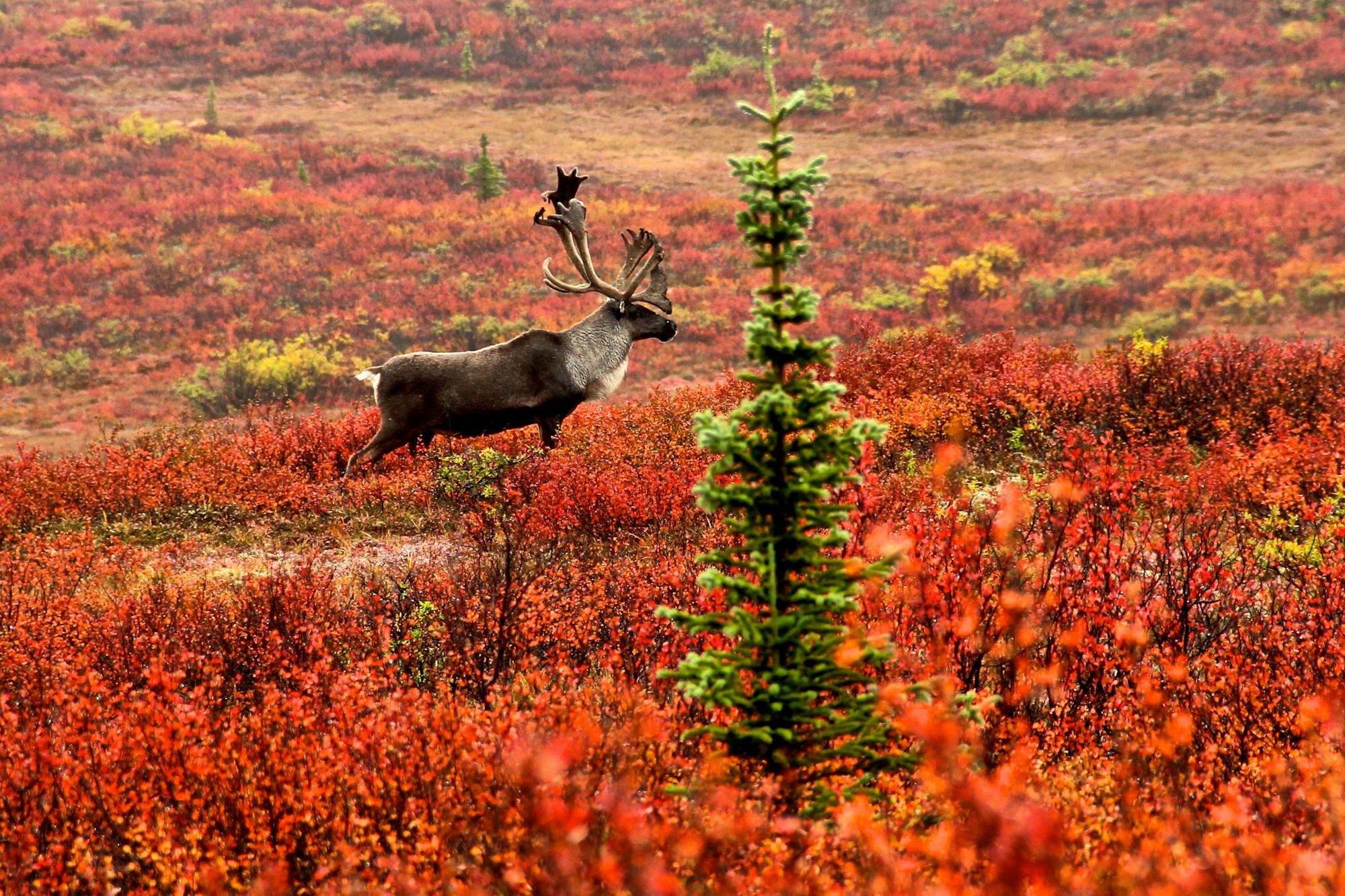
In both fable and fact, caribou — or reindeer, as they are known when domesticated — are renowned for their long-distance travels.
Survival in the harsh Arctic, where the ecosystem is fragile and plant growth is slow, requires almost constant movement. Each year four herds of caribou undertake epic journeys from their breeding range in the Arctic tundra and coastal plain of the Arctic National Wildlife Refuge, to their wintering grounds in the subarctic and boreal forests. These migrations — some of the longest terrestrial migrations in the world — allow them to take advantage of changing resources across habitats and time, such as moving to areas with greater winter food availability and shelter and then returning to calving grounds with lower densities of predators and harassing insects.
Why are caribou imperiled?
Global populations of caribou and reindeer have declined over 50% in the past few decades likely due to Arctic climate change and anthropogenic landscape change.
The food and habitat resources of the Arctic ecosystem on which caribou depend are easily destroyed by human disturbance. Unfortunately, such disturbances are widespread and include oil and gas exploration, mining, roads, infrastructure and, increasingly, the impacts of a changing climate.
Take the Teshekpuk Caribou herd, for example. This is one of two caribou herds on the National Petroleum Reserve-Alaska. The Teshekpuk Caribou herd relies on the Teshekpuk Lake area for calving and insect relief. This herd does not migrate south out of the Arctic, unlike some nearby herds, but instead migrates to winter habitat south of Teshekpuk Lake. Their journey takes them across areas that are slated for oil and gas development such as the Willow project .
As the Arctic landscape changes, caribou populations are dwindling. Industrialization can exacerbate this problem by disrupting migratory routes, as migrating caribou avoid infrastructure, and have an especially difficult time crossing roads.
There are other substantial treats outside of drilling and development in essential caribou habitat. Climate change is causing ice storms, or rain-on-snow events, that glaze over tundra vegetation making it difficult to access; melting permafrost and more frequent fires are changing lichen and plant communities; early peaking of nutrient rich spring forage (phenological mismatch) may be increasing before the herd arrives in the Refuge to breed; and increases in mosquito and harassing insect populations so severe that they force caribou from the area to seek refuge.
Defenders' Impact
With the coastal plain of the Arctic National Wildlife Refuge now threatened by oil and gas development, Defenders is working to protect this vital landscape for the caribou, polar bears, ringed and bearded seals, wolves, muskoxen, arctic foxes and hundreds of bird species that depend on it.
Defenders is at the forefront of all administrative planning processes regarding drilling and leasing programs, while galvanizing public support in Alaska and the rest of the country for legislation that would permanently prohibit development in the refuge.
We’re committed to preventing development that will harm this fragile ecosystem and are working with the administration and on Capitol Hill to protect the refuge and make sure our decision-makers fully understand how unique and valuable the Arctic Refuge is intact.
What You Can Do
Reduce your emissions to help mitigate warming temperatures in the Arctic. Speak out against drilling in the Arctic National Wildlife Refuge and support wildlife refuge protections.

About
Each year many herds of caribou undertake an epic journey from their breeding range in the Arctic tundra and the coastal plain of the Arctic National Wildlife Refuge to their wintering grounds south in the boreal forests. At over one thousand miles, this is one of the biggest large-mammal land migrations on Earth.
Alaska is the only state in the U.S. with caribou and is home to 32 herds currently ranging in size from under a hundred individuals to over 200,000. Caribou populations are known to fluctuate widely, but overall, global populations of caribou and reindeer have decreased over 50% since the 90s.
Arctic Alaska is among the most important landscapes for caribou and is home to the four largest herds.
Arctic National Wildlife Refuge:
- Porcupine Caribou herd (PCH) population estimate: 218,000
- Central Arctic herd (CAH) population estimate: 22,000
National Petroleum Reserve-Alaska:
- Western Arctic herd (WAH) population estimate: 152,000. WAH used to be the largest herd in Alaska and, at times, the largest in North America, but has continued to shrink.
- Teshekpuk Caribou herd (TCH) population estimate: 60,000. TCH population straddles Canada and Alaska and has not been revaluated since 2022 due to inclement weather and sampling conditions
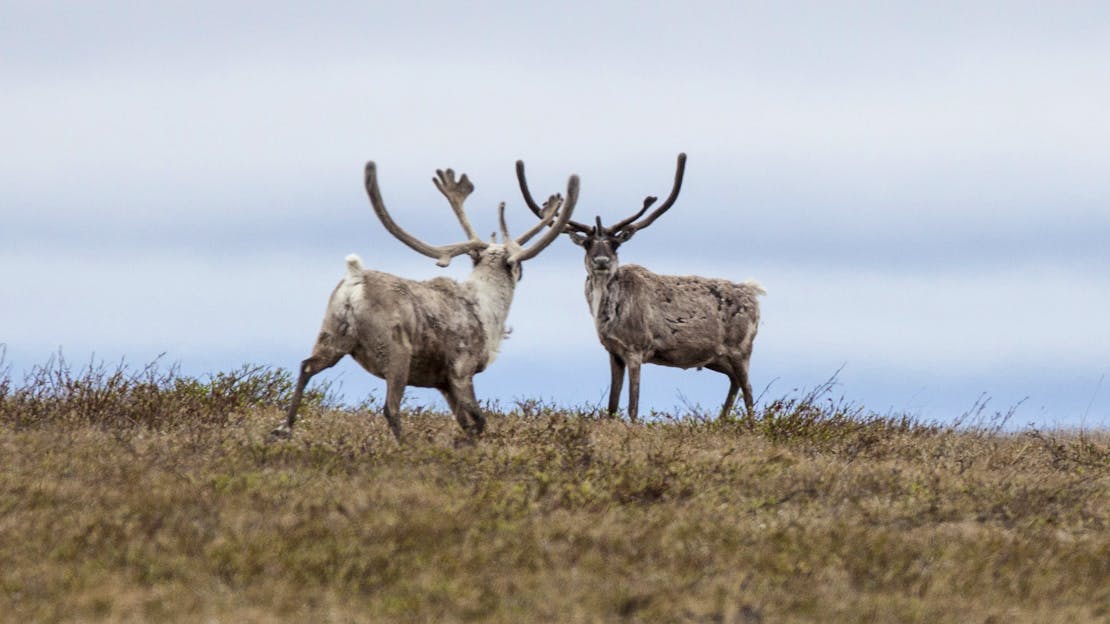
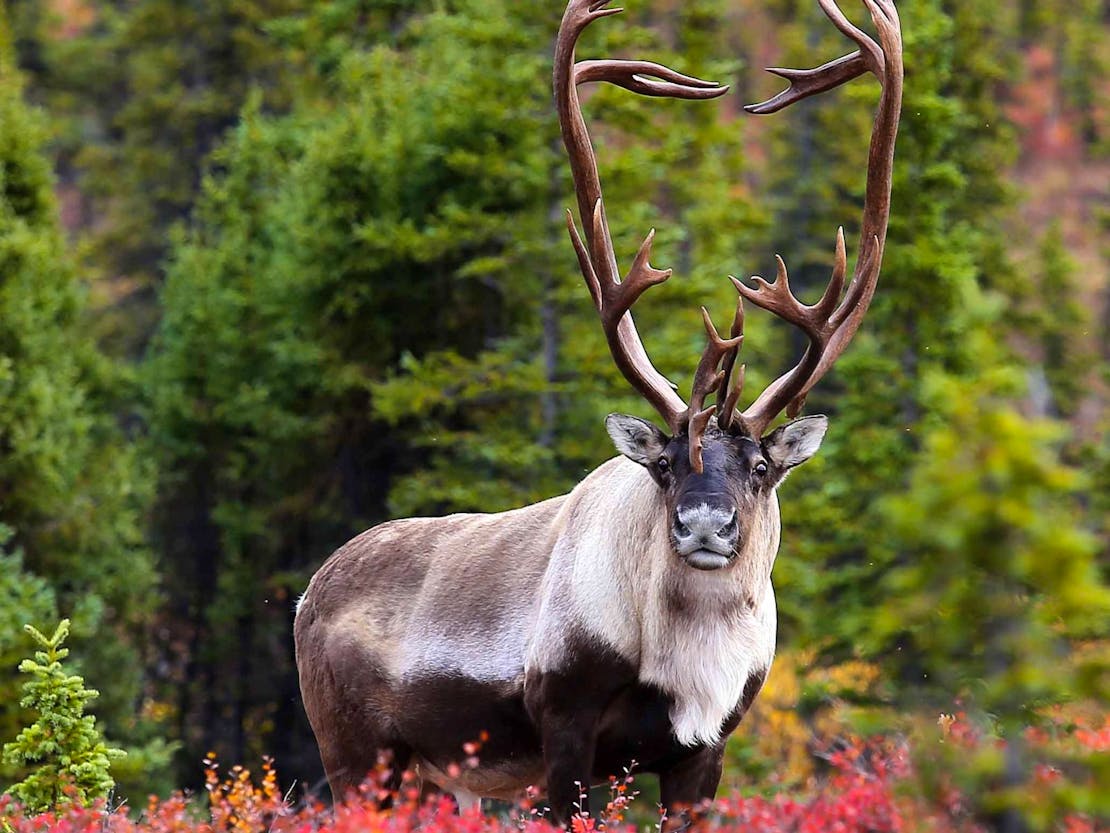
Caribou are the only deer species in which both sexes grow antlers. Every year they shed their antlers and grow new ones the following year.
Calving happens on the coastal plain of the Arctic National Wildlife Refuge in late May/early June. When calves are born, they are highly vulnerable to predation. Caribou band together seasonally in massive groups to provide safety in numbers, then break back off into small groups to optimize forage.
Mating Season: Early to mid-October
Gestation: October to early June
Number of offspring: 1 calf
Caribou primarily feed on lichens, grasses, sedges, and mushrooms.
Read More About the Caribou
News