
Join our mobile Rapid Response Network!
You can be the first to hear about how we’re going to hold this administration accountable and how you can fight back for wildlife!
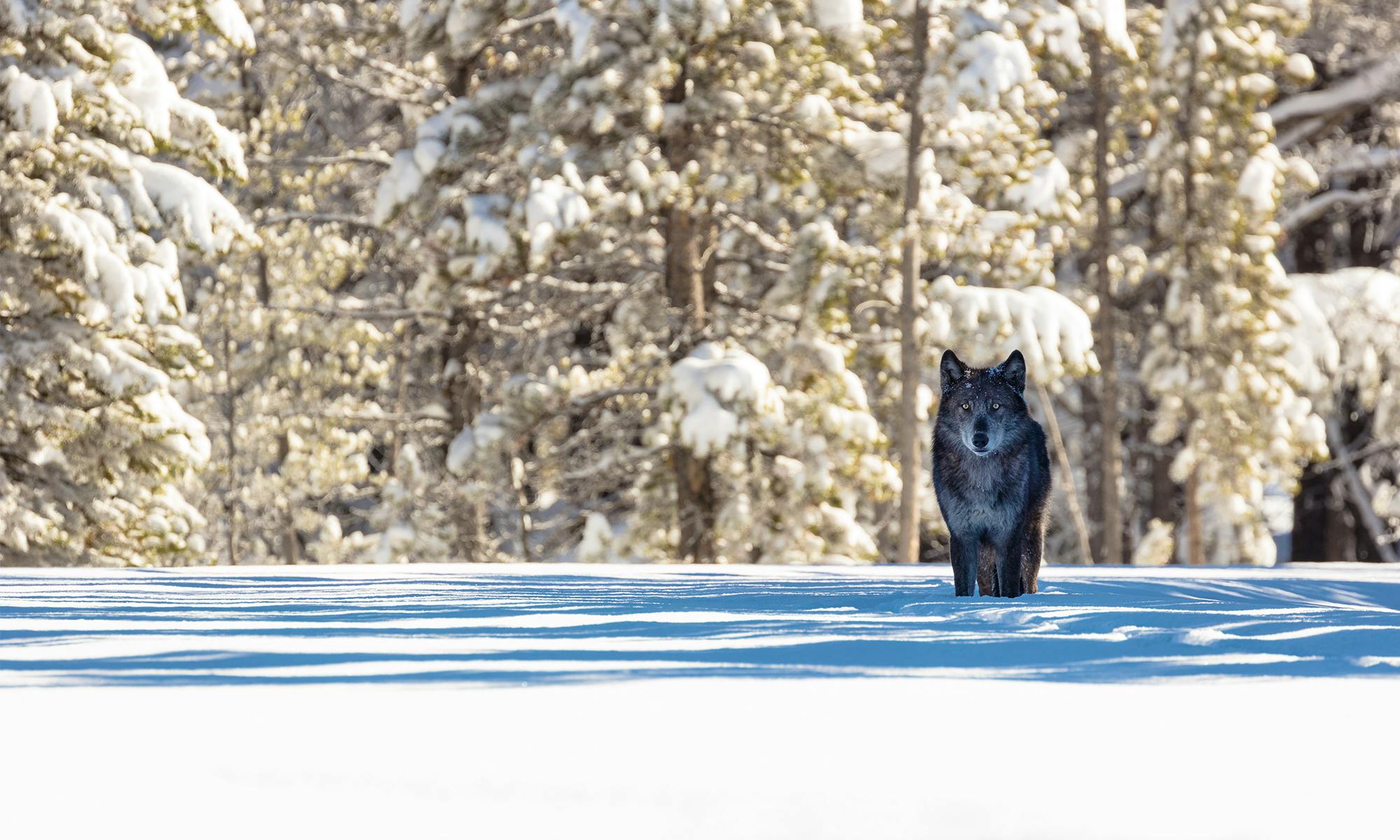
The gray wolf is an icon of wilderness, captivating imaginations and inspiring stories, legends and folklore. Unfortunately, however, people nearly hunted wolves to extinction in the lower 48 states, which required gray wolves to be placed under Endangered Species Act protections in 1974. Since then, gray wolves’ numbers have rebounded in the Great Lakes, Northern Rockies, Colorado, California and the Pacific Northwest thanks to dedicated conservation and coexistence work by advocates and groups like Defenders. But just as the U.S. was making progress for gray wolves, some federal protections were eliminated. In 2011, Congress removed protections for gray wolves in the Northern Rockies, and in 2020 the Trump administration stripped them of their critical ESA protections across the rest of the country. Defenders went to court over the ruling, and won at the district court, but anti-wolf legislators and extremists have been on the offensive ever since.
Wolves play a key role in keeping ecosystems balanced. They help keep deer and elk populations healthy—typically choosing older or sick individuals as prey—which can in turn benefit many other plant and animal species. The carcasses of their prey also help to redistribute nutrients and provide food for other wildlife species, like grizzly bears and other scavengers. Scientists are just beginning to fully understand the positive ripple effects wolves have on ecosystems.
The Trump administration’s premature decision to strip gray wolves of their federal ESA protections was nothing less than a betrayal of wildlife and of the advocates who spent decades helping to bring wolves back from the brink of extinction.
Though a judge invalidated this action in 2022, in 2024 the FWS filed its brief in the appeal of that decision, renewing its defense of the of ESA protections. Gray wolves have made monumental progress toward recovery but have yet to re-establish sustainable populations in much of the available habitat across the contiguous United States.
Wolves in the Northern Rockies states—Idaho, Montana, and Wyoming—have been exempted from the ongoing federal ESA listing battle in the rest of the lower 48. These states steadfastly display their intolerance toward gray wolves, underscoring why federal protections need to be restored in the region. Montana and Idaho have 1,096 and 1,550 gray wolves respectively, while Wyoming has an estimated 352 wolves, roughly half of which reside in Yellowstone National Park and are protected when inside park boundaries. In 2023, Idaho issued a wolf management plan that calls for a reduction of its population to about 500, while Montana’s draft wolf management plan seeks to reduce the current population by as much as 60%.
Read a full history of gray wolf protections in the U.S.
Help secure full protections for gray wolves: support our efforts to protect this icon of wilderness!
Wolves are threatened by conflict with humans and intolerance, and the loss of both habitat and protections under state and federal endangered species laws.


Defenders' Impact
Defenders works with ranchers and wildlife managers across the West to develop and implement nonlethal deterrents, strategic animal husbandry practices and other innovative tools to help minimize conflict between livestock and wolves and build social acceptance for wolves. We’ve helped hundreds of ranchers purchase turbo-fladry and livestock guard dogs, and hire range riders and deploy scare devices to keep wolves away from livestock.
We also monitor state and federal legislatures and wildlife agencies closely to track potential threats to wolf populations and recovery. Our experts and policy analysts engage with officials to discuss the problem and, where possible, offer scientifically-based and responsible solutions. If these measures fail, we turn to the courts.
What You Can Do
Share positive and accurate information about wolves. If you live in or near wolf habitat, speak up to your local fish and wildlife agencies to advocate for positive wolf management. Speak up for wolves and ask the Trump administration to keep wolves listed under the ESA. Join the Defenders pack and help us protect gray wolves.

About
The gray wolf’s range in North America has been reduced to Canada, Alaska, California, the Great Lakes, Northern Rockies and Pacific Northwest, when historically the species could be found throughout the continent. Fortunately, wolves are being reintroduced to Colorado, that program is ongoing. Wolves require large areas of contiguous habitat that can include forests and mountainous terrain with access to prey, protection from excessive persecution and areas for denning and taking shelter.
In the Lower 48, there are an estimated 70 wolves in California; 3,700 in the Great Lakes region; 2,900 in the Northern Rockies; and, 425 in the Pacific Northwest. In Colorado, there are currently nine individuals in the wild with an effort underway to reintroduce 20-40 more wolves by 2028.
Wolves live, travel and hunt in packs of seven to eight animals on average. Packs include the mother and father wolves (called the alphas), their pups and older offspring. The alpha female and male are typically the pack leaders that track and hunt prey, choose den sites and establish the pack's territory.
Breeding season occurs once a year late January through March. Pups are born blind and defenseless. The pack cares for the pups until they fully mature at about 10 months of age when they can hunt on their own. Once grown, young wolves may disperse. Dispersing wolves have been known to travel 500 miles or more in search of a mate and new territory.
Mating Season: January or February.
Gestation: 63 days
Litter size: 4-7 pups
Wolves eat ungulates, or large hoofed mammals, like elk, deer, moose and caribou, as well as beaver, rabbits and other small prey. Wolves are also scavengers and often eat animals that have died due to other causes.
Featured

News


