Join our mobile Rapid Response Network!
You can be the first to hear about how we’re going to hold this administration accountable and how you can fight back for wildlife!
There are seven species of sea turtles that inhabit the Earth’s oceans: loggerhead, leatherback, green turtle, hawksbill, Kemp’s ridley, olive ridley and flatback.
Sea turtles spend different parts of their long lives in different parts of the world, but most is spent in the ocean and remains a mystery to researchers. The flatback is the only species not found in the waters of the United States.
All sea turtles rely on beaches for nesting. The southeastern U.S. provides globally significant habitat for sea turtles, with Florida beaches hosting 90% of sea turtle nesting in the continental U.S. and the largest rookery of loggerhead nesting in the world.
Why are sea turtles imperiled?
All seven sea turtle species worldwide are listed as endangered or threatened under the Endangered Species Act.
Threats to sea turtles start before they even hatch. Sea turtle eggs incubating in 88 degrees Fahrenheit or hotter sand will hatch as female. Typically, eggs on the top of a clutch will become warmer with increased sun exposure and eggs buried further down in the sandy nest will stay cooler. With global temperatures on the rise due to climate change, sea turtle researchers are finding a disproportionate number of female hatchlings.
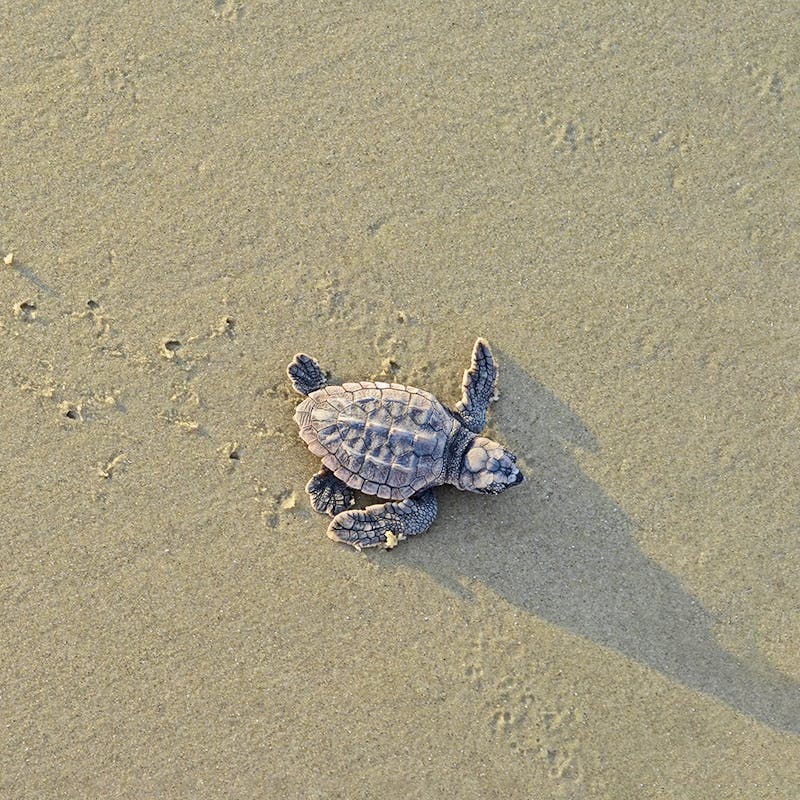
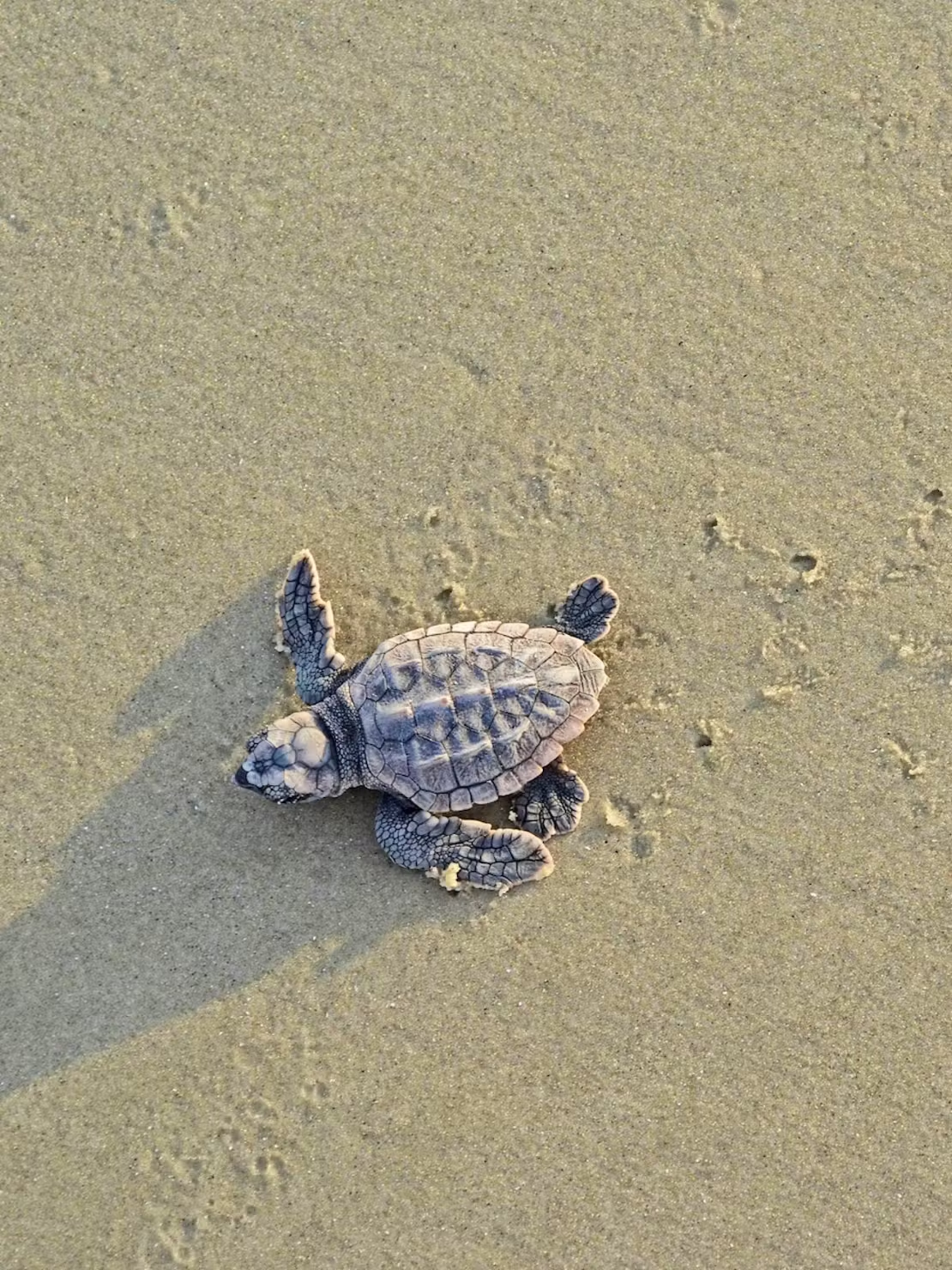
Once hatched, the tiny baby turtles need to make a mad dash to the ocean. Baby turtles orient themselves to the brightest horizon and rush towards it. On natural beaches, the brightest light comes from reflections from the moon and stars over the water, which guide the turtles towards the ocean. Artificial lights, however, confuse hatchlings and even some adults. If turtles become stranded on land, their chances of survival diminish.
Pollution is also a major threat to sea turtles, as the animals can become tangled in litter on the shore and in the water. Fishing lines, balloons and plastic bags are often confused for food, and garbage on beaches often attracts predators, like raccoons, foxes, seagulls and even ants that destroy tens of thousands of sea turtle eggs and prey on hatchlings every year.
Threats include fisheries bycatch, habitat loss and disturbance due to development, oil spills and other pollution, ingestion of plastics, entanglement in marine debris, artificial lighting, beach armoring, illegal harvesting, rising sea levels and warming sands.
All seven species of sea turtles are listed as endangered or threatened.
Defenders' Impact
In the Southeast and along the Gulf of Mexico, we work to preserve nesting beaches and foraging areas, improve coastal-construction policies so that jetties and sea walls do not prevent turtles from nesting, promote responsible lighting along nesting beaches, encourage local residents, visitors and businesses to remove trash that attracts raccoons and other predators that devour eggs and hatchlings, and organize workshops and beach clean-ups.
We strive to reform harmful fisheries that kill thousands of sea turtles every year and promote the widespread use of turtle excluder devices and innovative fishing practices to reduce sea turtle deaths in trawling nets. Defenders has also successfully advocated for new rules on Cape Hatteras National Seashore to limit off-road vehicles on the beach to protect nesting sites.
Defenders successfully advocated for laws to phase out the use of harmful large-mesh drift gillnets in California while promoting sustainable, local fisheries.
We continue to advocate against allowing any new oil and gas exploration and development along the Atlantic and Pacific Coasts.
What You Can Do
Turn out lights visible from the beach. Don’t litter, reduce the amount of garbage you produce and help clean up beaches and other natural areas. Follow posted signs to stay away from nesting areas. Watch out for sea turtles while boating. Don’t buy sea turtle products when you travel outside of the U.S. and only consume seafood products caught in sustainable, turtle-friendly ways.
About
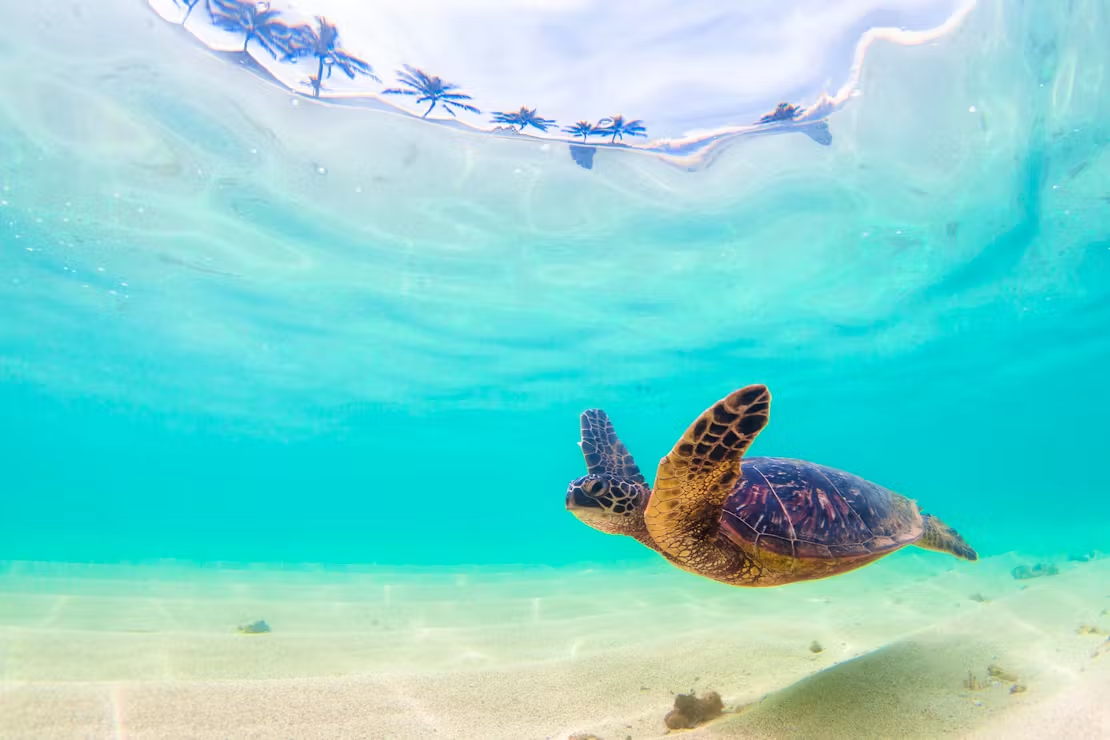
Sea turtles are found in all warm and temperate waters throughout the world and migrate hundreds of miles between nesting and feeding grounds. Most sea turtles undergo long migrations, some as far as 1,400 miles, between their feeding grounds and the beaches where they nest.
Since most male and juvenile sea turtles do not return to shore once they hatch and reach the ocean, populations are extremely hard to count.
Sea turtles spend most of their lives in the water, so most knowledge of sea turtle behavior is obtained by observing females and hatchlings on beaches during nesting season.
Female sea turtles return to the same nesting grounds where they were born and crawl ashore to nest, mostly at night. They move slowly to a dry area of the beach to dig a nest in which to deposit their eggs. After laying the eggs, the female covers the nest with sand and returns to the sea. Hatchlings emerge from the nest at night about 60 days later. They erupt as a group, orient themselves to the brightest horizon, and scramble towards the sea.
The sex of hatchlings is determined by the temperature of nesting beach sand: below 88 degrees, hatchlings are predominately male and above 88 degrees, hatchlings are predominantly female.
Climate change poses an extraordinary risk by flooding beaches and skewing the ratio of males to females.
Female sea turtles mature at 25 to 30 years. Only 1 in 1,000-10,000 hatchlings will survive to reproduce.
Nesting Season: March through October, depending on the species.
Gestation: About 60 days, but sand temperature can cause a broad range. Clutch size: An average of 80 to 120 eggs, depending on the species.
Sea turtle diets depend on the species, but some common foods include jellyfish, seagrasses, crabs, shrimp, sponges, snails, algae and mollusks.
Read More About Sea Turtles
News