
Join our mobile Rapid Response Network!
You can be the first to hear about how we’re going to hold this administration accountable and how you can fight back for wildlife!
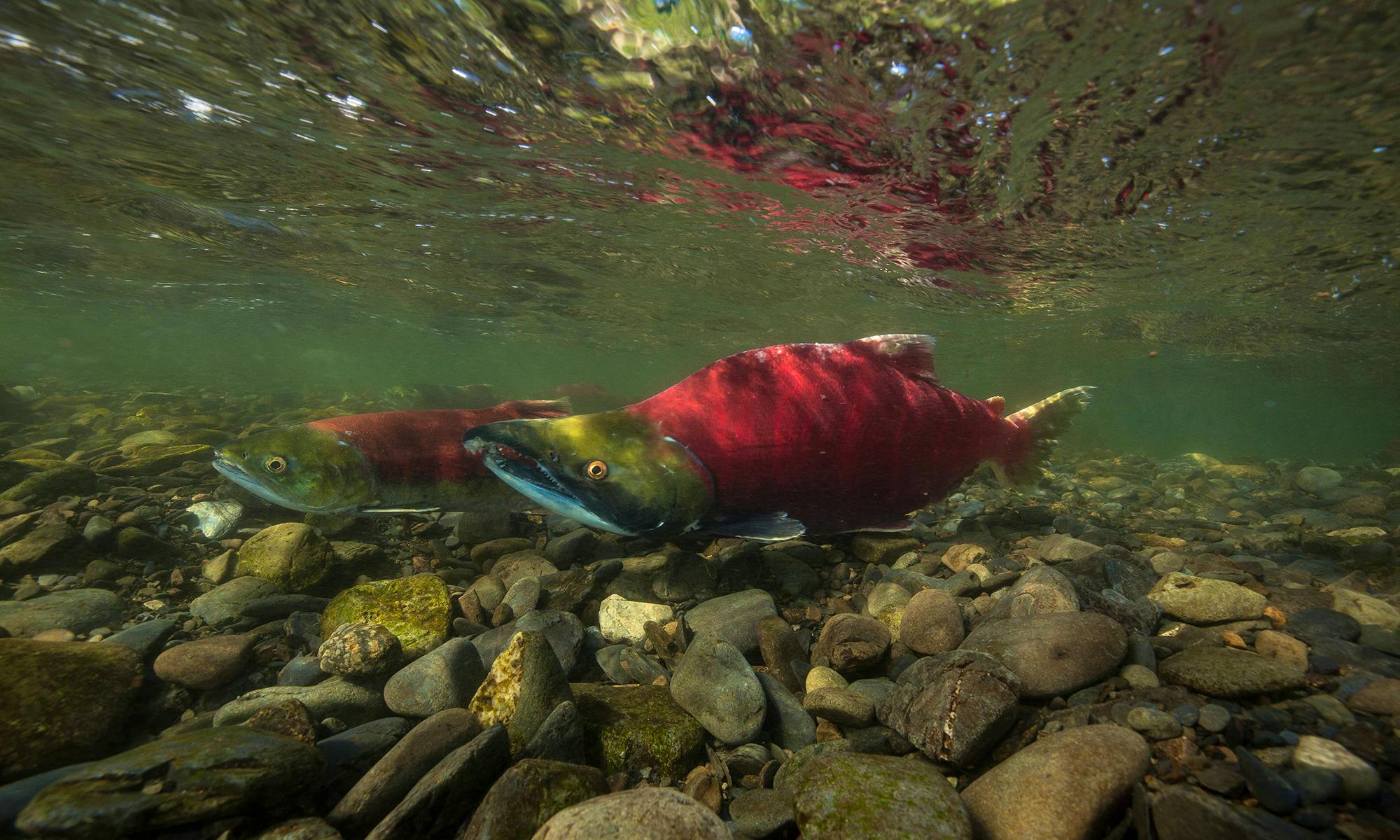
Pacific salmon are fish that live in the coastal waters and streams of the Pacific Northwest, including Canada, Alaska and Asia and are comprised of one of five species: Chinook, Coho, Sockeye, Chum and Pink.
Although each is different, they all follow the same lifecycle: hatch in freshwater streams, travel to the ocean to grow for one to seven years and return to their freshwater stream of origin to spawn.
Their seasonal ocean-to-river migrations bring crucial nitrogen inland to nurture healthy forests making them key indicators of healthy rivers and marine ecosystems. Salmon are an important source of nutrients, so as they disappear, the quality of the ecosystem decreases.
Salmon are also important prey for many species, including bears, critically endangered Southern Resident orcas and Cook Inlet beluga whales. They are also significant to the cultures of many tribes across the regions they inhabit that have depended on salmon for thousands of years. Salmon also are a vital economic driver for the commercial and recreational fishing industries and continue to feed many people across the globe.
Why are Pacific salmon imperiled?
Salmon runs have declined and disappeared throughout the Salish Sea, Columbia Basin, and California and Alaskan coastal waters and tributaries due to several factors. The primary cause is ecological degradation for industrial and economic development.
The damming of rivers by humans, for example, has contributed to the collapse and extirpation of many salmon runs. Many dams hinder salmon during their upstream migrations, making it more difficult for adults to spawn upriver, and cause stress and mortality among newly hatched salmon traveling downriver.
Coastal development has also led to a loss of salmon habitat and an increase in polluted stormwater runoff, which can harm and kill salmon. Climate change and human development are also increasing stream and river temperatures nationwide. This can be deadly for salmon, because they require free-flowing cold-water streams to survive.
Rising stream and river temperatures, dams, excessive water diversions, habitat destruction and pollution are threatening salmon.
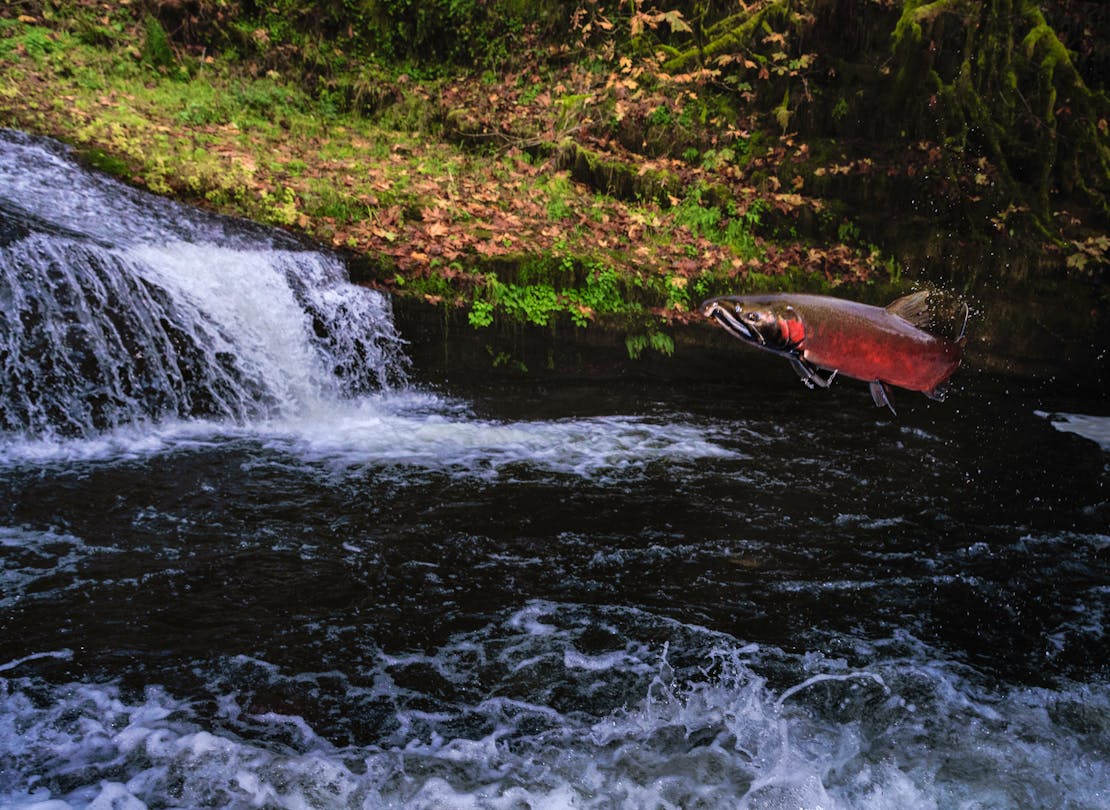
Many species and populations are listed as threatened or endangered.
Status varies across species and populations.

Defenders' Impact
Defenders advocates for the removal of outdated and destructive dams, such as the four federal dams on the lower Snake River in Washington state. We are also fighting for stronger Endangered Species Act protections, extensive salmon restoration funding and increased freshwater flows for winter-run Chinook salmon and other imperiled salmon runs that migrate through the San Francisco Bay-Delta Estuary.
Defenders launched a program in 2017 called Orcas Love Raingardens, which promoted raingardens at public schools and parks to help reduce polluted stormwater runoff. Raingardens offer an excellent opportunity to educate the public and students about orcas and salmon and ways they can help keep pollutants out of the Salish Sea.
Defenders works to understand how pollution is affecting the waters of Cook Inlet in Alaska and advocates for the protection and restoration of salmon habitat across the state.
Defenders also advocates for federal programs like the Pacific Coast Salmon Recovery Fund and the Environmental Protection Agency’s Geographic Area Program that provide critical funding to protect and restore salmon, habitat and water quality.
What You Can Do
Learn where your water comes from and conserve where you can. Limit or eliminate the use of toxic chemicals, including pesticides, oil and gas. Go to a car wash or wash your vehicle on the lawn instead of the driveway to stop chemicals from leeching into stormwater. Plant a raingarden to help filter pollutants from stormwater runoff. Go solar to reduce California, the Pacific Northwest and Alaska’s reliance on hydropower to enable the removal of dams. Volunteer to restore salmon habitat.

About
Pacific salmon can be found along the entire Pacific Coast from the Arctic down through California.
It is difficult to estimate population numbers due to the large number of species and wide geographic range. Many populations, however, have dropped drastically from what they were historically.
Salmon are anadromous, meaning they are born in freshwater headwaters, migrate to the sea and return to freshwater to reproduce or spawn.
When the female reaches the place where she will lay her eggs, she makes a depression in the riverbed with her tail and deposits her eggs in it. She waits for males to fertilize the eggs, then covers the depression and moves on to make another. These nests are called redds. Females will make as many depressions as it takes to lay all their eggs.
In general, young salmon eat insects, invertebrates and plankton; adults eat other fish, squid, eels and shrimp. Unlike all other salmon, the sockeye salmon has a diet that consists almost entirely of plankton.
Featured
Facing Weather Whiplash, California Must Change Water Management
Last year's World Water Day theme was “Accelerating Change.” The theme was chosen to help meet the United Nations’ Sustainable Development Goal to update and safely manage water systems and sanitation globally by 2030.
News