Join our mobile Rapid Response Network!
You can be the first to hear about how we’re going to hold this administration accountable and how you can fight back for wildlife!
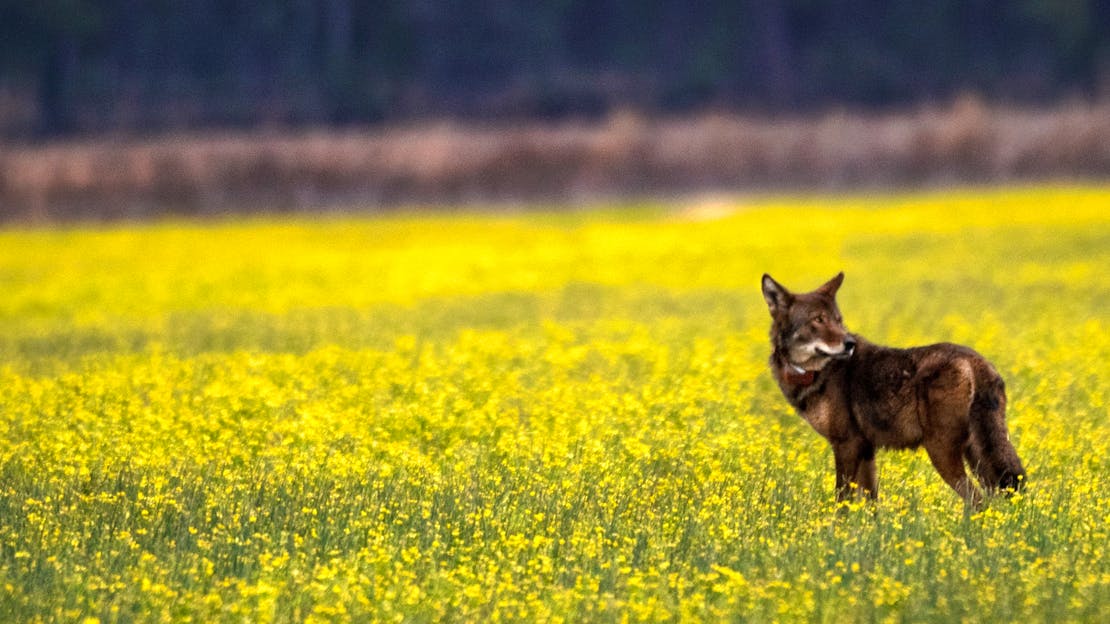
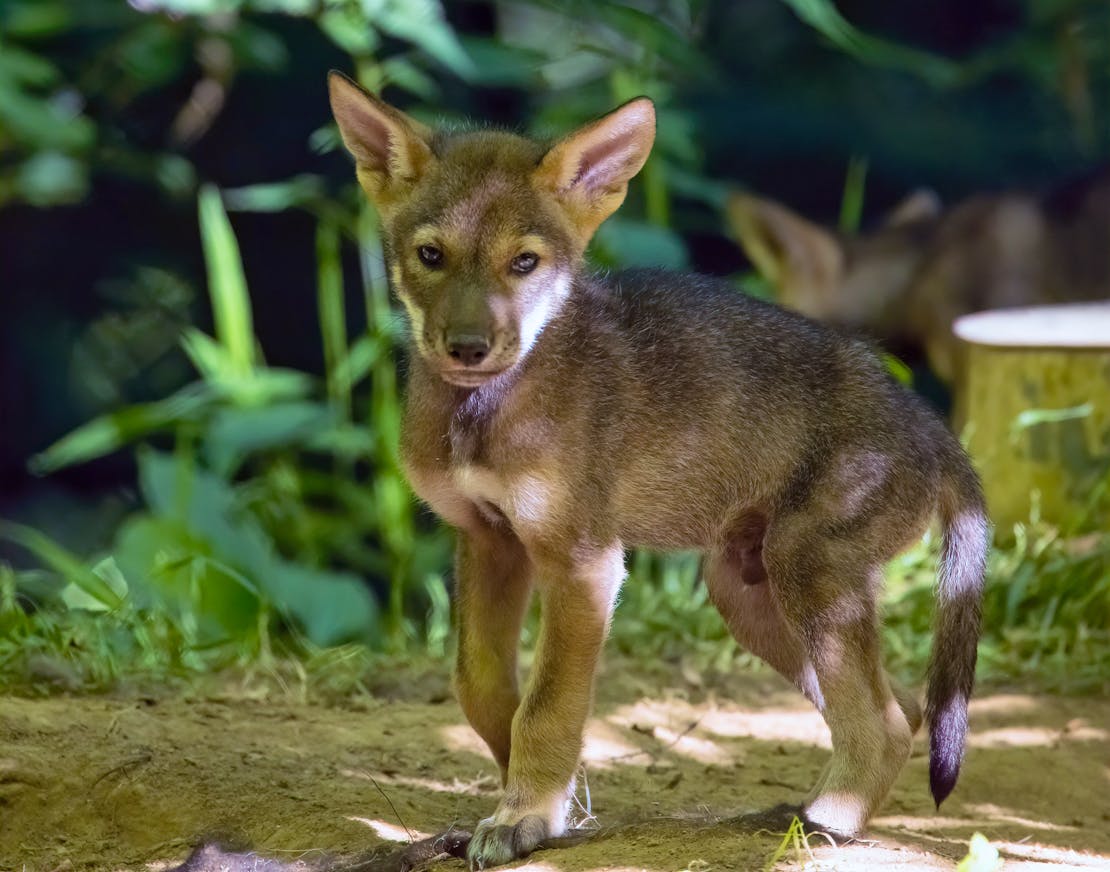
The Red Wolf is a smaller, thinner cousin of the gray wolf, and is named for its distinctive reddish coat. Native to the Southeast, the Red Wolf is the world's most endangered canid and is uniquely "All-American" as its entire historical range is confined within what is now the United States.
Why are Red Wolves endangered?
Once roaming as far west as Texas, down into Florida and up into the Midwest, the Red Wolf now persists in one small wild population on the Albemarle Peninsula in eastern North Carolina. In fact, this creature has lost more of its historical territory — 99.7 percent — than any other large carnivore, including lions, tigers and snow leopards.
The Red Wolf has faced an embattled road to recovery since its listing under the Endangered Species Act in 1973.A first of its kind captive breeding program in 1987 led to the reintroduction of Red Wolves to the wild, marking the first time large carnivores were reintroduced to a landscape. Their reintroduction provided an important model for subsequent reintroduction programs to restore gray wolves, Mexican gray wolves, California condors and black-footed ferrets to the wild. Captive-bred Red Wolves were released into the wild every year between 1987 and 2014, which helped boost the wild population to nearly 150 animals.
Tragically, this progress came to a screeching halt and the population crashed due to a dramatic spike in illegal poaching and vehicle collisions, along with devastating management failures. By 2020, only seven wolves were left in the wild. Thanks to successful, court-ordered reintroductions, the wild population has since grown significantly with an estimated 25 Red Wolves roaming North Carolina’s Albemarle Peninsula today.
Political shifts, vehicular strikes, gunshot mortality, hybridization, habitat degradation and lack of education and acceptance all threaten Red Wolves.

Defenders' Impact
Defenders has worked on Red Wolf recovery since the mid-1980s through a combination of advocacy, public education and litigation.
In 2016, Defenders brought on two full-time field conservation staff to lead a grassroots outreach effort in North Carolina to increase awareness of the critical situation for wild Red Wolves in Eastern North Carolina. We have engaged in lawsuits to force the U.S. Fish and Wildlife Service and North Carolina Wildlife Resource Commission to protect this critically endangered species.
In the spring of 2017, FWS announced plans to review and update the 10(j) rule that regulates management of the wild “nonessential experimental population” of Red Wolves in North Carolina. Defenders helped mobilize nearly 55,000 of our members and the public to speak up in support of the Red Wolf recovery program.
In 2020, Defenders, along with several partners, filed a federal lawsuit challenging FWS’s management failures and the agency’s illegal decision to abandon the reintroduction program, among other policy actions that jeopardized the existence of Red Wolves in the wild. As a result of our legal action, the court ordered FWS to restart its reintroduction program. We finalized a landmark settlement of this lawsuit in 2023 with an agreement that guarantees continued federal recovery efforts, requiring annual plans to release wolves into the wild and giving this species hope for long-term recovery.
Defenders is taking a leadership role in strengthening relationships and cooperation with FWS and others to support further population growth, prevent human-caused mortality, build awareness and foster appreciation and pride in the recovery of Red Wolves. Our growing Red Wolf Ambassadors program guides local advocates to serve as liaisons between conservation organizations and local communities to strengthen awareness and support for Red Wolves. We are helping to meet the needs and concerns of local communities while facilitating progress on Red Wolf recovery and fostering acceptance for wolves by providing communities with proven tools and strategies that minimize human-wildlife conflicts.
What You Can Do
Contact the FWS and the NCWRC to voice your support for Red Wolf recovery. If you live in Red Wolf country, practice nonlethal management techniques when dealing with wildlife on your property.
Support our work to protect Red Wolves.
About
Historically, Red Wolves ranged throughout the southeastern U.S. from Pennsylvania to Florida and as far west as Texas. Today, wild populations roam just over 1.7 million acres throughout northeastern North Carolina, including Alligator River National Wildlife Refuge and Pocosin Lakes National Wildlife Refuge.
There are 25 known Red Wolves left in the wild.
Red Wolves are most active at night and communicate by scent marking, vocalizations (including howling), facial expressions and body postures. Shy and secretive, Red Wolves hunt alone or in small packs – complex social structures that include the breeding adult pair (the alpha male and female) and their offspring. Red Wolves tend to form pair-bonds for life.
Red Wolves live in family groups that typically consist of a breeding male and female, along with yearling pups from the prior season. The family group will help care for the young and bring food to the breeding female while her puppies are very young. Red Wolf dens are often located in hollow trees, stream banks and sand knolls.
Mating season: Late winter
Gestation: 60-63 days
Litter size: 2-8 pups
The Red Wolf’s diet primarily consists of deer and small mammals such as rabbits and rodents; however, they have been known to eat insects and berries.
Featured
Coexisting with Red Wolves
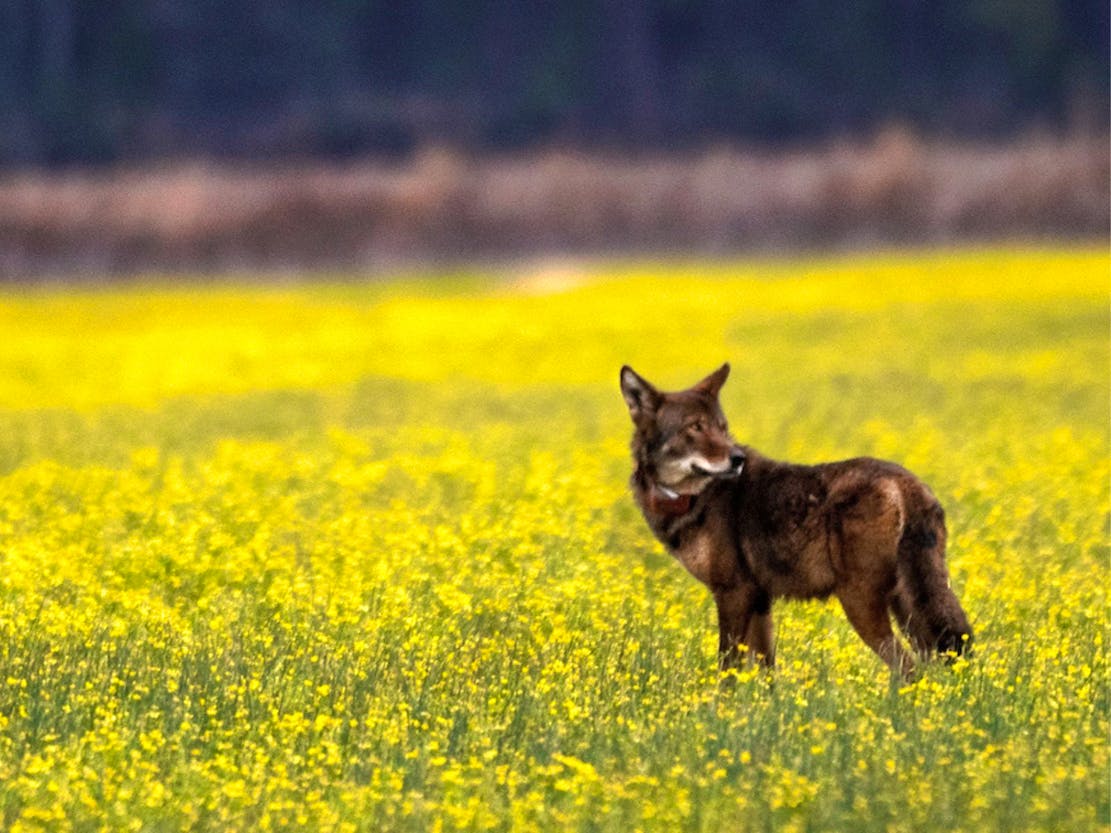
Although the majority of North Carolinians support Red Wolf recovery, public misconception and intolerance also pose a significant challenge. To address these challenges, incentive-based coexistence strategies will play a critical role in safeguarding the Red Wolf's future.
Publications
Read More About the Red Wolf
News