Join our mobile Rapid Response Network!
You can be the first to hear about how we’re going to hold this administration accountable and how you can fight back for wildlife!
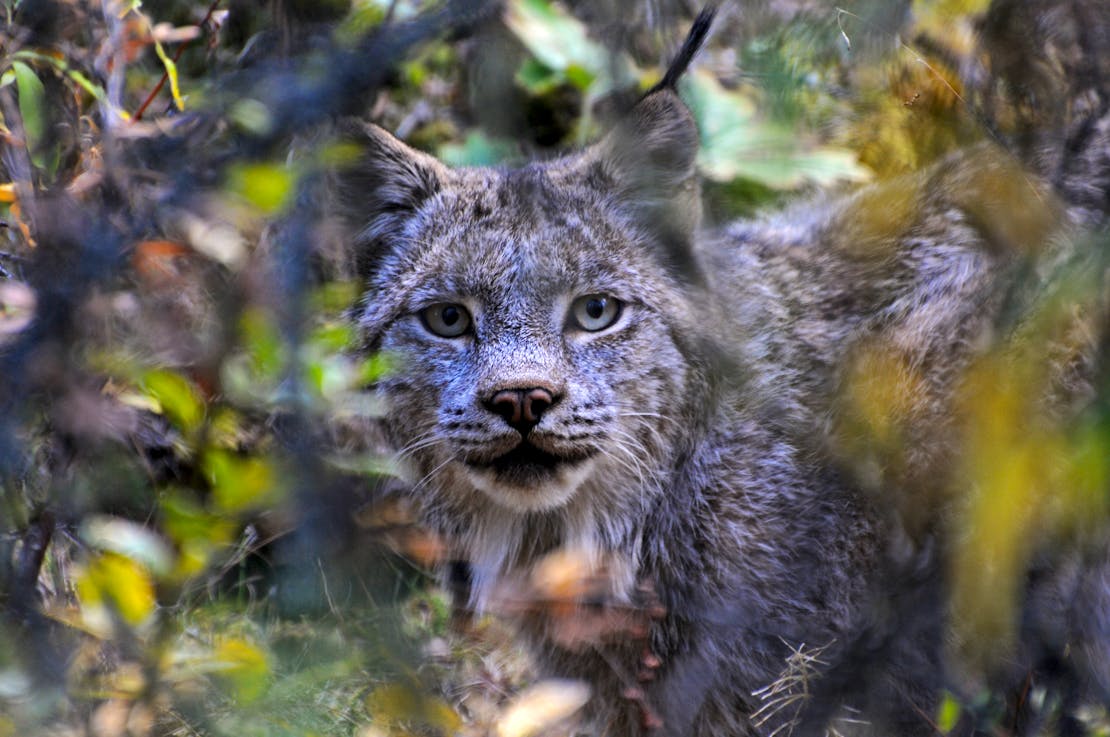
Canada lynx look similar to bobcats, but there are some distinguishing features: bobcats have shorter tufts on their ears, the tip of their tail is black on top and white underneath, and bobcats have shorter legs and smaller feet than lynx.
Perhaps the biggest distinction is lynx mostly occur along the Canadian border or in mountainous regions, while bobcats range across almost the entire Lower 48 states.
Lynx, like other forest hunters, play an important ecological role. As a mid-size carnivore, lynx target smaller prey species that reproduce relatively quickly. They also require a mixed habitat that includes younger forests with thick vegetation for hunting small prey, and older forests with a full canopy and good cover for denning.
Why are Canada lynx threatened?
Canada lynx are protected under the Endangered Species Act, but still face several threats throughout their range. At the time of their listing, land and forest management plans had not done enough to protect the animals and their habitats. Now enforcement of regulations and habitat management are critical to protect this species.
Trapping lynx is largely banned in the U.S. and Canada, but regulations for other species often have negative impacts in lynx due to incidental capture. Logging, road construction and land development fragment lynx habitat. Fragmentation limits the lynx's access to critical resources and can isolate populations, making it difficult for individuals to find mates and disperse.
Changes in forest composition due to shifting climate patterns and reduced snow cover alter Canada lynx’s habitat, their ability to hunt snowshoe hares and their prey’s availability.
The lynx’s most important requirements — snow, space, hares, and habitat connectivity — are threatened by climate change and various human activities.
The FWS has proposed delisting the Canada lynx.

Defenders' Impact
In 2000, in response to Defenders’ petition and litigation, the U.S. Fish and Wildlife Service listed the lynx as “threatened” under the ESA. This listing provided lynx with many protections and much needed attention, helped support research and monitoring of lynx populations found in the contiguous U.S., and stopped lynx trapping in Montana.
Defenders also supported the Colorado Division of Wildlife as they reintroduced lynx to core habitat in the southern Rocky Mountains.
What You Can Do
Reduce greenhouse gas emissions and fight climate change. Advocate for sustainable forest management practices to help protect important lynx habitat. If you live a state with these wild cats, support proposals to reduce incidental take of Canada lynx through restricting trapping seasons and methods.
Join one of our citizen science monitoring programs to help gather information about mesocarnivores and Support Defenders work in the lower 48.
About
Lynx are generally found in boreal forests with cold, snowy winters and a high density of their favorite prey: the snowshoe hare. Lynx can be found throughout much of the boreal forest of Alaska and Canada. In the Lower 48 they are known to have sustained breeding populations in Montana, Washington, Maine and Minnesota and have been reintroduced to Colorado.
Canada lynx population size is largely unknown, as it is difficult to get an accurate estimate on this species. In the lower 48, however, lynx populations are known to be substantially reduced from historical levels.
Generally solitary animals, lynx usually hunt and travel alone, and are slightly more active at night. Lynx hunt by actively walking, flushing and chasing prey, and by using resting or hunting beds to wait for prey to come close, and then giving chase.
Instead of creating a den site, lynx locate their kittens under an existing feature, such as a downed log, root system or simple ground depression surrounded by dense vegetation.
Kittens stay with their mother for the first year while they learn to hunt. When snowshoe hares are abundant, mothers have an average of four kittens and even yearling females may give birth. Female lynx have smaller litters the rest of the time, when fewer hares are available.
Mating Season: March and April Gestation: 63 to 70 days
Litter Size: 1 to 5 kittens
Lynx are specialized hunters that target snowshoe hare, which make up the bulk of their diet. Lynx are also known to occasionally eat mice, voles, grouse, ptarmigan, red squirrel and carrion.
Featured

The Canada Lynx: Not Only Found In Canada
Despite its name, the Canada lynx can be found in several parts of the lower 48 United States. Ellen Richmond joins us to talk about where the Canada lynx can be found, why it’s threatened, and how Defenders is fighting for its future.
Read More About the Canada Lynx
News