
Join our mobile Rapid Response Network!
You can be the first to hear about how we’re going to hold this administration accountable and how you can fight back for wildlife!
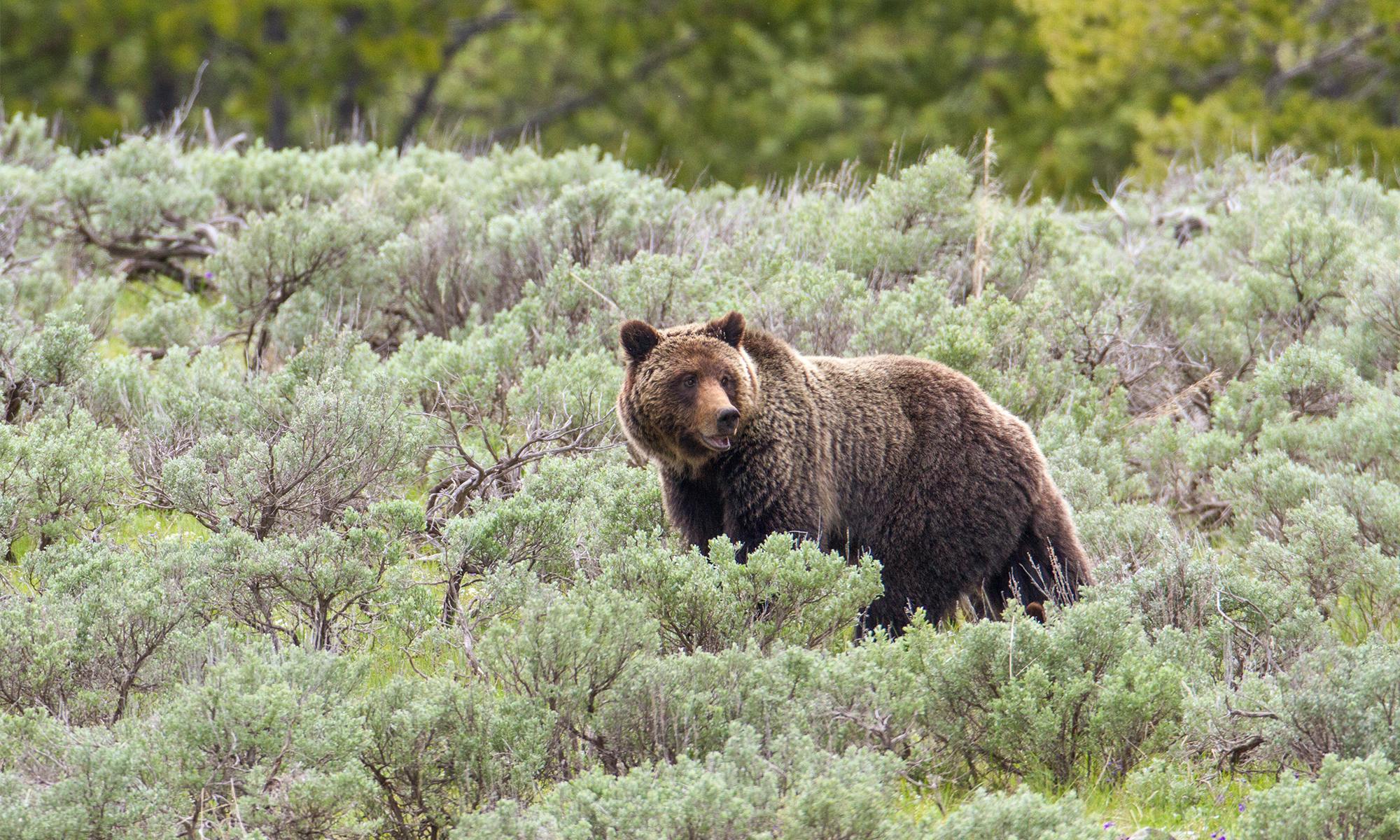
Grizzly bears, a subspecies of brown bear, were once numerous.
They ranged across North America from California to the Great Plains, and from Mexico all the way up into Alaska. While grizzly bears are still plentiful in Alaska, even there some are experiencing impacts from climate change.
Why are grizzly bears imperiled?
As with many species, westward expansion, human transformation of the landscape, and fear led to near eradication of grizzly bears in the continental United States. When they were listed as threatened under the Endangered Species Act in 1975, the grizzly bear population in the lower 48 was down to less than 900 bears occupying less than 2% of their former range. Grizzly bears still occupy less than 6% of their former range in the lower 48, in four of six grizzly bear recovery areas.
Human-caused mortalities and habitat loss remain primary threats to grizzly bear populations in the lower 48 states.
Defenders' Impact
Recognizing human-bear conflicts were a leading cause of human-related grizzly bear deaths, Defenders initiated our grizzly bear conflict mitigation, or coexistence, program in the contiguous western states in the late 1990s. Our program has now expanded to also include parts of Alaska. Defenders works directly with local residents and communities, non-profit organizations, and government agencies on a wide variety of conflict prevention projects, largely on private lands. We also work with tribes to incorporate Tribal lands and projects.
A primary example is our popular grizzly bear electric fencing incentive program. We see tremendous conservation value in providing financial support and technical expertise to build electric fence systems that effectively deter grizzly bears and other carnivores from accessing human-related attractants like livestock, domestic fruit and garbage, among other things.
To keep bears from getting food-conditioned at campsites and dumps — which can increase risk for both bears and people, and often results in the death of the bear — attractants like food and garbage on our public lands and in communities must be properly managed. Defenders supports this through assisting with costs associated with fencing a waste transfer site, cost sharing on bear resistant garbage cans for communities, and purchasing food storage lockers for land management agencies — like the U.S. Forest Service — to install at campgrounds and other high bear and human use areas.
We also host bear awareness education events and trainings for community groups and school kids living in bear country to share awareness tips and practice using bear spray.
What You Can Do
If you live in bear habitat, practice proven coexistence techniques. Always carry bear spray when recreating or working in bear country and know how to use it. Let your elected officials know that you support wildlife conservation and habitat protections and the Endangered Species Act.

About
Though still common in much of Alaska, British Columbia and Alberta, grizzly bears have been reduced in the lower 48 to just four populations in Wyoming, Montana, Idaho and Washington.
Bitterroot Ecosystem: No viable grizzly bear population
North Cascades Ecosystem: No viable grizzly bear population
U.S. Portion of Selkirk Ecosystem: ~50 bears
Cabinet-Yaak Ecosystem: ~70 bears
Northern Continental Divide Ecosystem: ~1,100 bears
Yellowstone Ecosystem: ~1,000 bears
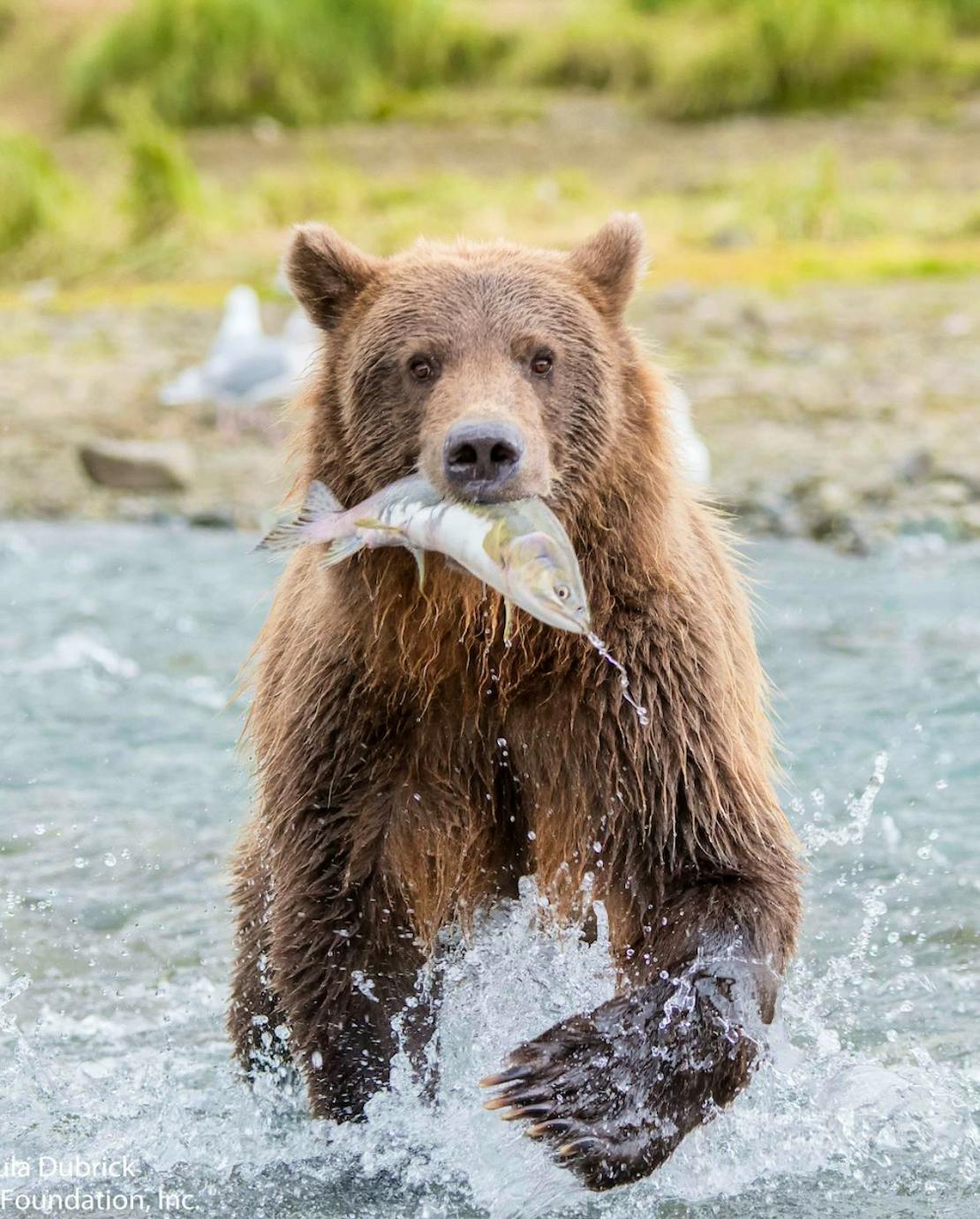
Grizzly bears are normally solitary animals. However, they may be seen feeding together where food is abundant, such as at salmon streams and whitebark pine sites. Grizzly bears need to eat a lot in the summer and fall to build up sufficient fat reserves to survive the winter denning period and reproduce.
Mother bears rear cubs for two to three years. Males do not help raise the cubs. In fact, males can be a danger to the cubs, so females avoid male grizzly bears while rearing their cubs.
Mating Season: Early May through mid-July
Gestation: Anywhere from 180-270 days, including delayed implantation.
Litter Size: One to four cubs, but average is two to three.
Grizzly bears are omnivores, and their diet can vary widely. They may eat seeds, berries, roots, grasses, fungi, deer, elk, fish, dead animals and insects.
Featured

Coexisting with Grizzly Bears
Recognizing that human-bear conflicts were a leading cause of human-related grizzly bear deaths, Defenders initiated our grizzly bear conflict mitigation, or coexistence, program in the late 1990s.
News


