Join our mobile Rapid Response Network!
You can be the first to hear about how we’re going to hold this administration accountable and how you can fight back for wildlife!
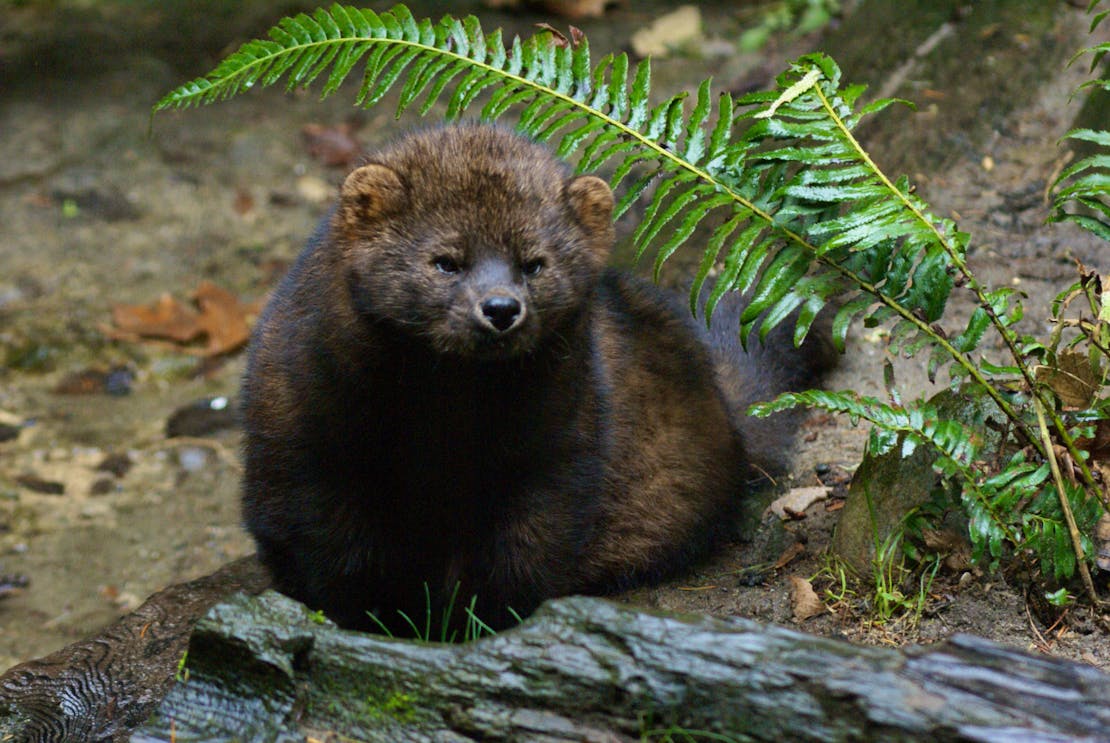
Fishers are elusive, forest-dwelling members of the weasel family. They have long, slim bodies, short legs, rounded ears and bushy tails.
Fishers are larger and darker than martens and have thick fur. Fishers are agile, swift and excellent climbers. Their the ability to turn their back feet nearly 180 degrees allows them to climb head-first down trees. Despite their name, fishers do not hunt or eat fish. Instead, they have a varied diet consisting mostly of small to mid-sized mammals including squirrels, wood rats and hares.
Why are fishers Imperiled?
Rampant loss of mature forest habitat due to unsustainable logging practices of the past remains a problem, while the effects of climate change including drought and insect-caused tree mortality impacts fisher habitat today. Abnormally large, severe fires and poisoning by rodenticide used in illegal marijuana growing operations on public lands also contribute to the decline of this rare and charismatic critter.
Over-harvesting for pelts and loss of forest habitat due to logging and road building has significantly reduced and fragmented the fisher's range. Climate change impacts are increasing the frequency, size and severity of fires throughout the fisher’s range, removing the older, cavity-bearing trees they need for denning.
Federally endangered (Southern Sierra Nevada Distinct Population Segment) and listed as threatened under the California Endangered Species Act (Southern Sierra Nevada population)
Defenders' Impact
In both the northern Rockies and their West Coast ranges, Defenders is working to secure adequate federal protections for fishers and their habitats, actively influencing policies and decisions affecting them — such as trapping in Montana and logging important habitat in California’s southern Sierra Nevada — and preparing for changes to fisher habitat caused by climate change.
Defenders successfully advocated for protecting the highly isolated fisher population in the southern Sierra Nevada under both the federal and California endangered species acts. We have also worked on the ground to introduce fishers to Olympic National Park in Washington State.
What You Can Do
Reduce your greenhouse gas emissions and help fight climate change.

About
Fishers live only in North America. In the U.S., they’re found from New England south to Tennessee; northern Great Lake states; northern Rockies; and several small West Coast populations in southwestern Oregon, northwestern California, and the southern Sierra Nevada. Reintroduction efforts have added populations in Olympic National Park, central Oregon and the northern Sierra Nevada.
Fishers are common in the Northeast and Midwest U.S. They are one of the rarest carnivores, however, in the northern Rockies and Northwest into California’s southern Sierra Nevada. Researchers believe there may be fewer than 300 adult fishers in the southern Sierra Nevada population.
Fishers prefer large areas of dense mature coniferous or mixed forest. They are solitary animals, except when females are raising their kits. They are mainly nocturnal but may be active during the day. They travel many miles in search of prey, seeking shelter in hollow trees, logs, rock crevices and dens of other animals.
Mating Season: April
Gestation: Egg implantation is delayed until February or March of the next year, following which is a 30-day gestation period
Litter Size: One to four kits born mid-March to late April
The kits are dependent on their mother until the fall and usually disperse to find their own territories at 10 to 12 months old.
Fishers eat snowshoe hares, rabbits, rodents and birds. They are one of the few specialized predators of porcupines. Fishers are effective hunters, but are also known to eat lizards, insects, nuts and berries when larger prey is not available.
News