Bobcat
Lynx rufus
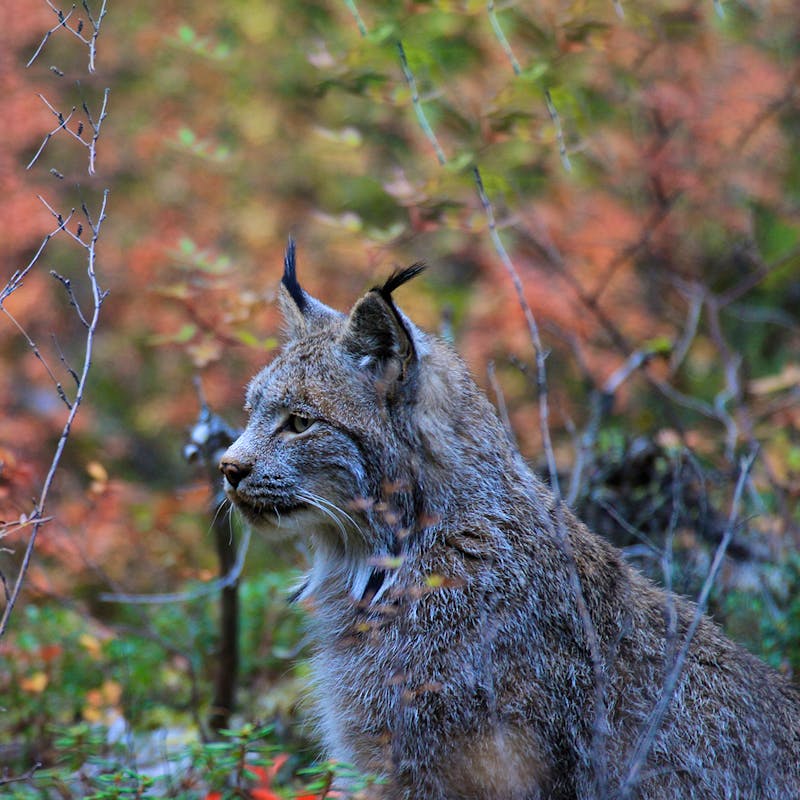
The most common wildcat in North America, the bobcat is named for its short, bobbed tail. They are medium-sized cats and are slightly smaller but similar in appearance to their cousin, the lynx. Their coats vary in color from shades of beige to brown fur with spotted or lined markings in dark brown or black.
Height 17-23 inches
Length 25-41 inches
Weight 16-28 lbs (males); 10-18
lbs (females)
Lifespan 12-13 years
Diet
Staples rabbits and hares
Known to eat rodents, birds, bats and
even adult deer, which they usually consume during the winter months, as well as
lambs, poultry and young pigs when a ranch is near.
Population
Approximately 725,000 to 1,020,000 bobcats remain in the wild.
Range
Bobcats were once found throughout most of North America from northern Mexico to southern Canada. In the early to mid 1900s, bobcat populations in many Midwestern and eastern states of the United States were decimated due to the increased value of its fur. However, international laws began to protect the world's spotted cats in the 1970s, and populations have rebounded since then Today, populations are stable in many northern states and are reviving in many others.
Behavior
Bobcat habitat varies widely from forests and mountainous areas to semi-deserts and brush land. A habitat dense with vegetation and lots of prey is ideal. Bobcats are excellent hunters, stalking prey with stealth and patience, then capturing their meals with one great leap.
Usually solitary and territorial animals, females never share territory with each other. Male territories, however, tend to overlap. Territories are established with scent markings and territory sizes are extremely varied – generally 25-30 square miles for males and about five square miles for females.
Dens Each bobcat may have several dens, one main den and several auxiliary dens, in its territory.
Main den usually a cave or rock shelter, but can be a hollow log, fallen tree, or some other protected place. (Also called the natal den)
Auxiliary dens located in less-visited portions of the home range and are often brush piles, rock ledges or stumps. (Also called shelter dens)
Reproduction
Mating season Late winter, but throughout the year is
possible
Gestation 50- 70 days. Kittens are usually born around early
spring
Litter size 1 – 6 kittens
The kittens begin eating solid
food at around two months and begin learning to hunt at 5 months. When
they are between 8 and 11 months, the kittens are evicted from their mother's
territory.
Threats
In Mexico, bobcats are persecuted as sheep predators and are frequently killed by farmers. They are still hunted and trapped for their fur throughout most of their range. Habitat destruction and the ever-expanding human population limit their ranges.
Legal status/protection
*Endangered Species Act (Mexican bobcat, Felis rufus escuinapae), **CITES Appendix II
*The Endangered Species Act requires the US federal government to identify species threatened with extinction, identify habitat they need to survive, and help protect both. In doing so, the Act works to ensure the basic health of our natural ecosystems and protect the legacy of conservation we leave to our children and grandchildren.
**Convention on International Trade in Endangered Species of Wild Fauna and Flora, an international treaty with 172 member countries. Appendix I listed species cannot be traded commercially. Appendix II listed species can be traded commercially only if it does not harm their survival.
How You Can Help
- Help bobcats and other wildlife by adopting an animal at our Wildlife Adoption Center.
- Take Action for Wildlife at our Wildlife Action Center.