Join our mobile Rapid Response Network!
You can be the first to hear about how we’re going to hold this administration accountable and how you can fight back for wildlife!
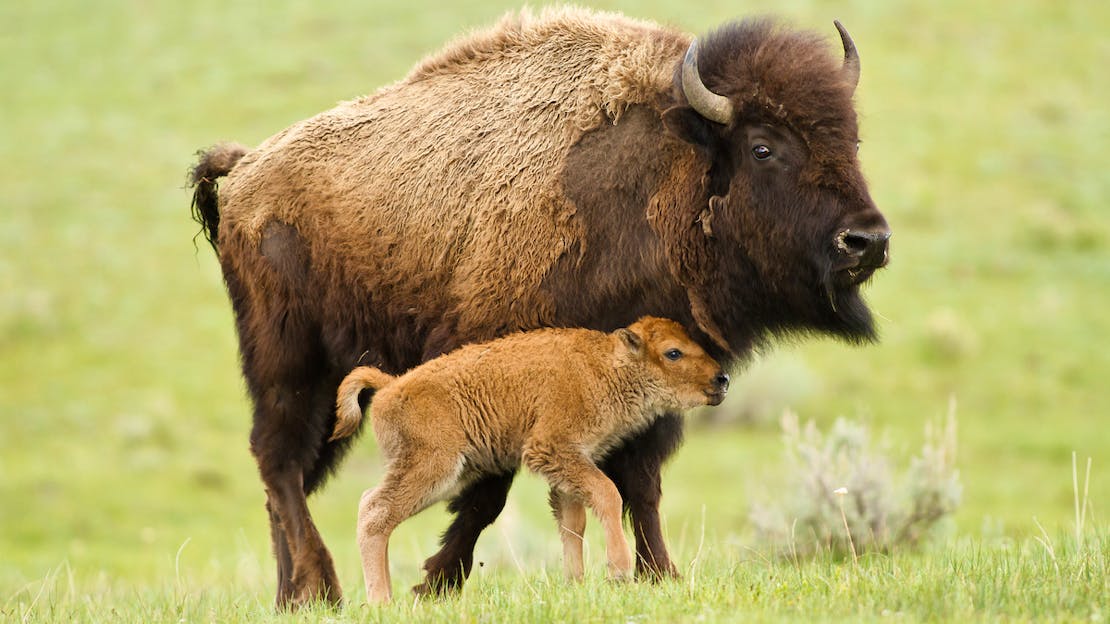
The American bison is the largest land mammal in North America and the national mammal of the United States. Despite its iconic status, the American bison has a long and varied history in the U.S.
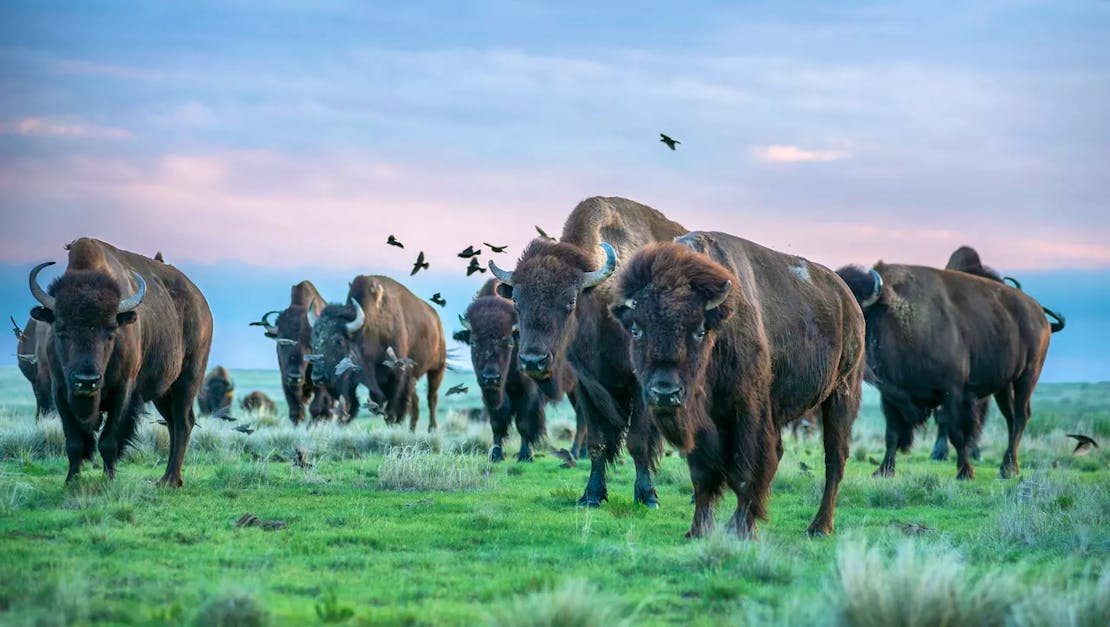
Plains bison are being restored to Native American and public lands across the U.S. These herds play a significant role in the health of our grasslands as they help create habitat for other animals and promote plant growth when they forage. They are also valued by Indigenous communities for cultural renewal.
Why are bison imperiled?
More than 30 million bison once roamed North America. As a major food source, bison formed the basis of the economy for numerous Plains Indian societies. In the late 19th century, however, the U.S. government encouraged mass hunting of bison in an organized effort to destroy the livelihoods of Plains Indians. By the late 1800s, fewer than 1,000 bison remained and all Plains Indians were forced onto reservations.
Today urbanization, agriculture and industrial development fragments their grassland habitat and climate change exacerbates this threat. Low genetic diversity among individual herds threatens the ecological restoration of bison. And human intolerance is also a threat to their survival.
Partners are united and working across North America, however, to restore the bison. One recent breakthrough in helping better manage today’s herds was when Colorado Governor Jared Polis signed the “Protect Wild Bison” bill in April 2025. The bill designated bison in Colorado as wildlife in addition to livestock. Dual listing gives Colorado Parks and Wildlife the ability to manage bison as a big game species, working with tribes as well as the federal Bureau of Land Management and agencies from bordering states. Herds along the Colorado-Utah border, for example, could be managed cooperatively between Colorado Parks and Wildlife, Utah, the federal Bureau of Land Management and the Ute Tribes.
Habitat loss, hunting, climate change, low genetic diversity, human intolerance.
Defenders' Impact
Defenders supports bison conservation on both public and tribal lands. We partner with national parks inhabited by bison, including Yellowstone, Badlands and Wind Cave National Parks.
We also support bison conservation efforts at the American Prairie Reserve in Montana and Soapstone Prairie Natural Area in Colorado. Our partnerships over the years with Native American tribes have led to the establishment of major buffalo herds in Montana by the Fort Peck Assiniboine and Sioux Tribes, Fort Belknap Assiniboine and Gros Ventre tribes and the Blackfeet Nation.
We are engaged in land and natural resource planning efforts with state federal agencies, as well as advocating for better consideration of bison as a species of concern on Forest Service lands.
Defenders and our partners are also paving the way for Yellowstone bison just outside the park’s boundaries. In 2011, we started the Yellowstone Bison Coexistence Program as a collaborative effort designed to help landowners coexist with wild bison on the landscape outside the park.
What You Can Do
Help us speak up for wild bison by contacting your Members of Congress and governors in states where wild bison live. Advocate for protection of their habitat and management like other wild species.
Support our work to protect bison and other imperiled wildlife.
About
Though bison once roamed across much of North America, today they are “ecologically extinct” as a wild species throughout most of their historic range, except for a few national parks and other small wildlife areas. Two small herds of pure, wild Yellowstone bison live at Fort Peck and Fort Belknap Indian Reservations.
There are approximately 20,000 plains bison managed as wildlife and 5,000 of those are unfenced and disease-free.
Known for roaming great distances, bison move continuously as they eat and aerate the soil, providing suitable habitat for many other species. Bison are adapted to the extreme weather conditions of the Great Plains, from summer heat to winter cold and blizzards.
Bulls and cows do not mingle until breeding season. Dominant bulls “tend” to cows, following the cow around until the cow chooses to mate.
Mating Season: June-September, peak activity in July-August
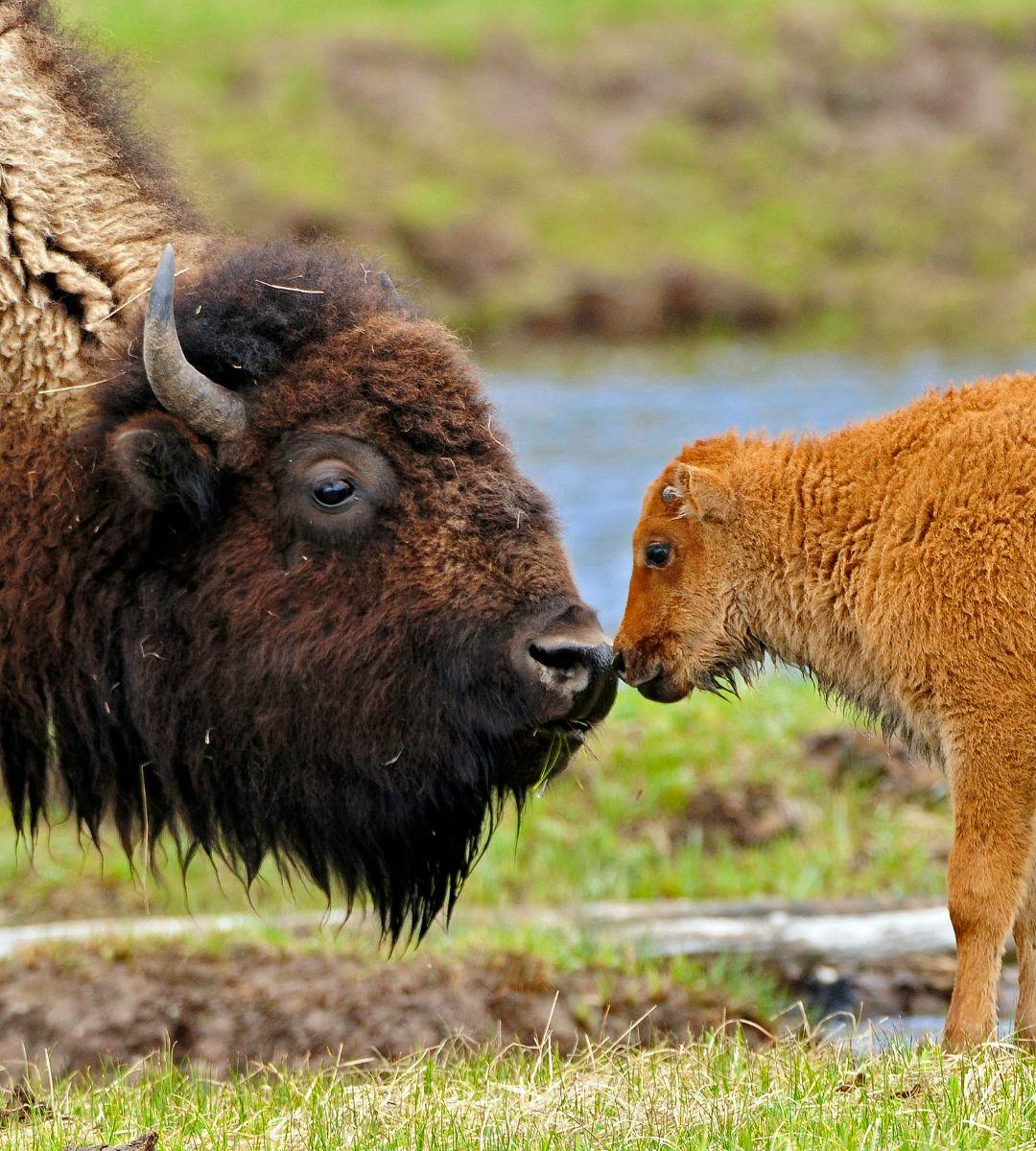
Gestation: 270-285 days. Calves are born April-June.
Litter size: 1 calf
Bison mainly eat grasses and sedges. Even in winter, bison can dig through deep snow with their heads to reach the vegetation below.
Featured

Bison Restoration on the Great Plains
Learn more about bison restoration on the Great Plains.
News