
Join our mobile Rapid Response Network!
You can be the first to hear about how we’re going to hold this administration accountable and how you can fight back for wildlife!
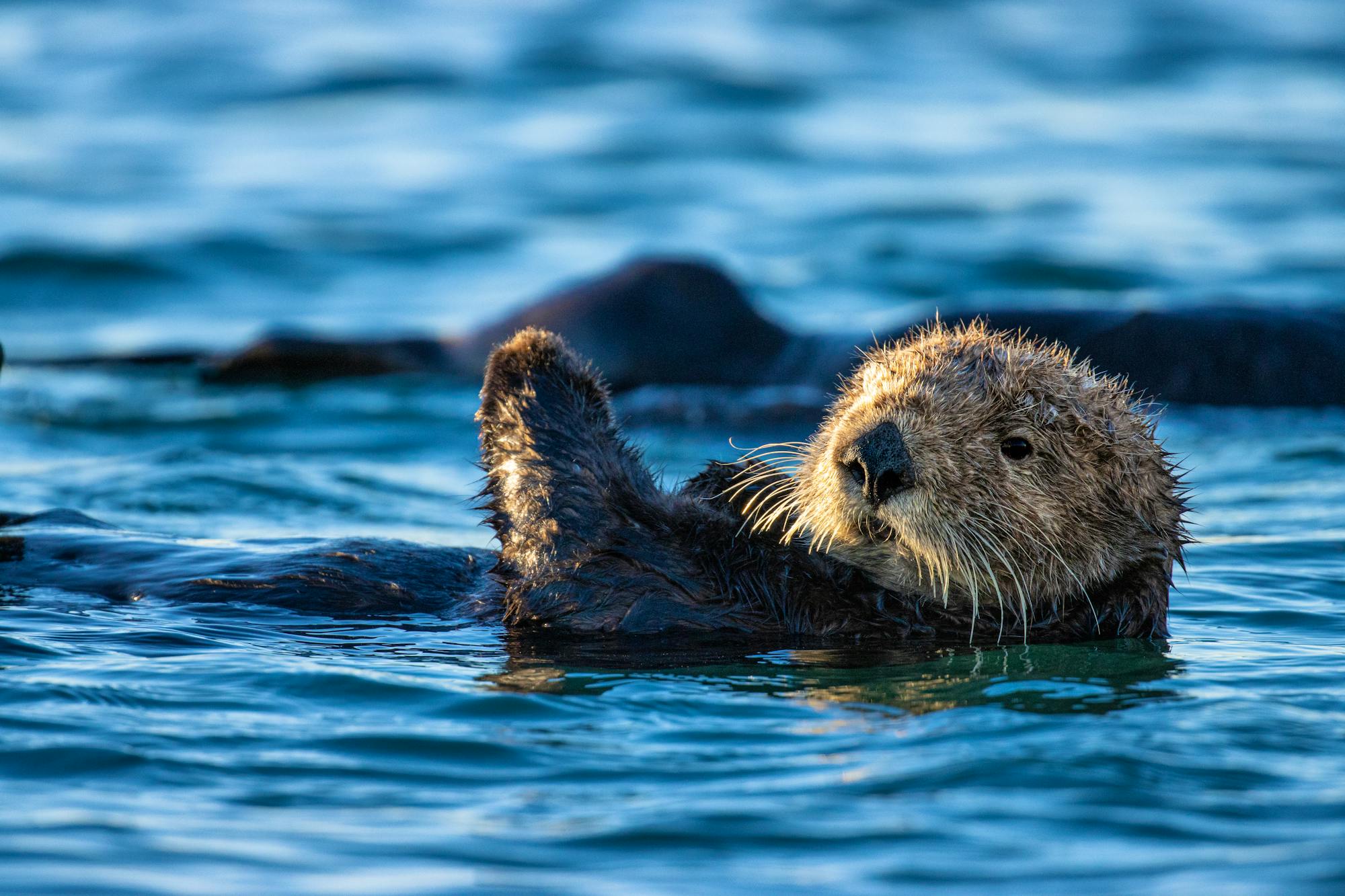
Sea otters are a keystone species, meaning they have disproportionate impact on their environment. They are found in shallow coastal waters of the North Pacific, from the coasts of California and Washington up to Alaska.
As top predators, sea otters are critical to maintaining the balance of nearshore ecosystems, such as kelp forests, embayments and estuaries. Without sea otters, sea urchins can overpopulate the seafloor and devour the kelp forests that provide cover and food for other marine animals. By maintaining healthy kelp forests, sea otters indirectly help to reduce levels of atmospheric carbon dioxide, a prevalent greenhouse gas, as kelp absorbs and sequesters carbon.
Why are sea otters imperiled?
Hunted to near extinction in the 18th and 19th centuries, sea otters finally gained protections with the signing of the International Fur Seal Treaty of 1911. In the 1970s, they received additional safeguards under the Marine Mammal Protection Act and the Endangered Species Act.
Worldwide, sea otters have slowly recovered and reached high numbers in some areas of their historical range. Southern sea otters, however, only inhabit about 13% of their former range and they remain absent from the Oregon coast. While sea otters are vulnerable to natural environmental changes, their populations are also significantly impacted by human factors. Major threats include oil spills, pollution, disease and loss of kelp.
Humans are the biggest threat to sea otter populations. Direct conflict with humans — through shootings, fishing gear entanglements and boat strikes — take a toll on sea otters, but oil spills, pollution, disease and loss of kelp pose major threats.

Defenders' Impact
In California, Defenders of Wildlife joined lawmakers on legislation that established the California Sea Otter Voluntary Tax Contribution Fund. California taxpayers can donate to the Fund each year on their state tax form to help pay for important scientific research, public education and law enforcement that benefit sea otters.
We also helped pass a state law mandating warning signs on containers of “flushable” kitty litter. This became necessary when researchers discovered a protozoal parasite, Toxoplasma gondii, in flushed cat feces can pass through wastewater treatment facilities and harm sea otters. Defenders additionally supported a bill to phase out the use of drift gillnets in California waters to protect sea otters and other marine species, such as whales, sea lions, sea turtles and sharks.
Defenders collaborates with communities to promote coexistence between locals and sea otters. For example, in an area where sea otters were crossing roads in Moss Landing, we helped place crossing signs and established slow speed zones.
In Alaska, Defenders is part of the Southeast Sea Otter working group to actively help incorporate the reintroduced population to the Southeast community. We engage with government officials and active projects to ensure the long-term health of the species.
You can be a part of the solution for endangered species: support our efforts to protect the wild!
And join us every September for Sea Otter Awareness Week!
What You Can Do
Watch sea otters — and all wildlife — from a safe distance, and never disturb a resting sea otter. If you live in California, donate to the California Sea Otter Voluntary Tax Contribution Fund when you file your taxes. Help us protect sea otters!

About
Sea otters live in shallow coastal waters in the northern Pacific. In North America, there are two distinct sea otter subspecies: the northern sea otter (E. l. kenyoni) and the southern sea otter (E. l. nereis). Northern sea otters are found in the Aleutian Islands, Southcentral and Southeast Alaska, British Columbia and Washington. Southern sea otters — also called California sea otters — live in waters along the California coastline, ranging from San Mateo County in the north to Santa Barbara County in the south.
Historically, the worldwide population of sea otters numbered between 150,000 and 300,000 throughout the Pacific Rim. The southern sea otter population, which once numbered about 16,000 animals, is hovering around 3,000 today.
Sea otters spend much of their lives in the water and can dive up to 330 feet when foraging for food, though most dives are much shallower. They often rest in coastal kelp forests, draping the kelp over their bodies to keep from drifting.
Sea otters are one of the few mammals, other than primates, known to use tools. They pry mollusks from underwater rocks and crevices and collect other shellfish underwater. Once brought to the surface, they hammer and bash open the items using rocks and other objects.
Mating Season: Throughout the year
Gestation: 6 to 8 months
Litter Size: One pup, twins are rare
Sea otters must eat approximately 25% of their weight in food each day. They rely on their dense fur and a high metabolism to stay warm in the cold ocean.
Sea otters eat urchins, abalone, mussels, clams, crabs and snails. Additional prey varies by subspecies. For example, northern sea otters eat fish, while southern sea otters do not.
Featured

The Extraordinary Sea Otter
Tour the special places that play a part in the past, present and future recovery of California's sea otters!
News