
Join our mobile Rapid Response Network!
You can be the first to hear about how we’re going to hold this administration accountable and how you can fight back for wildlife!
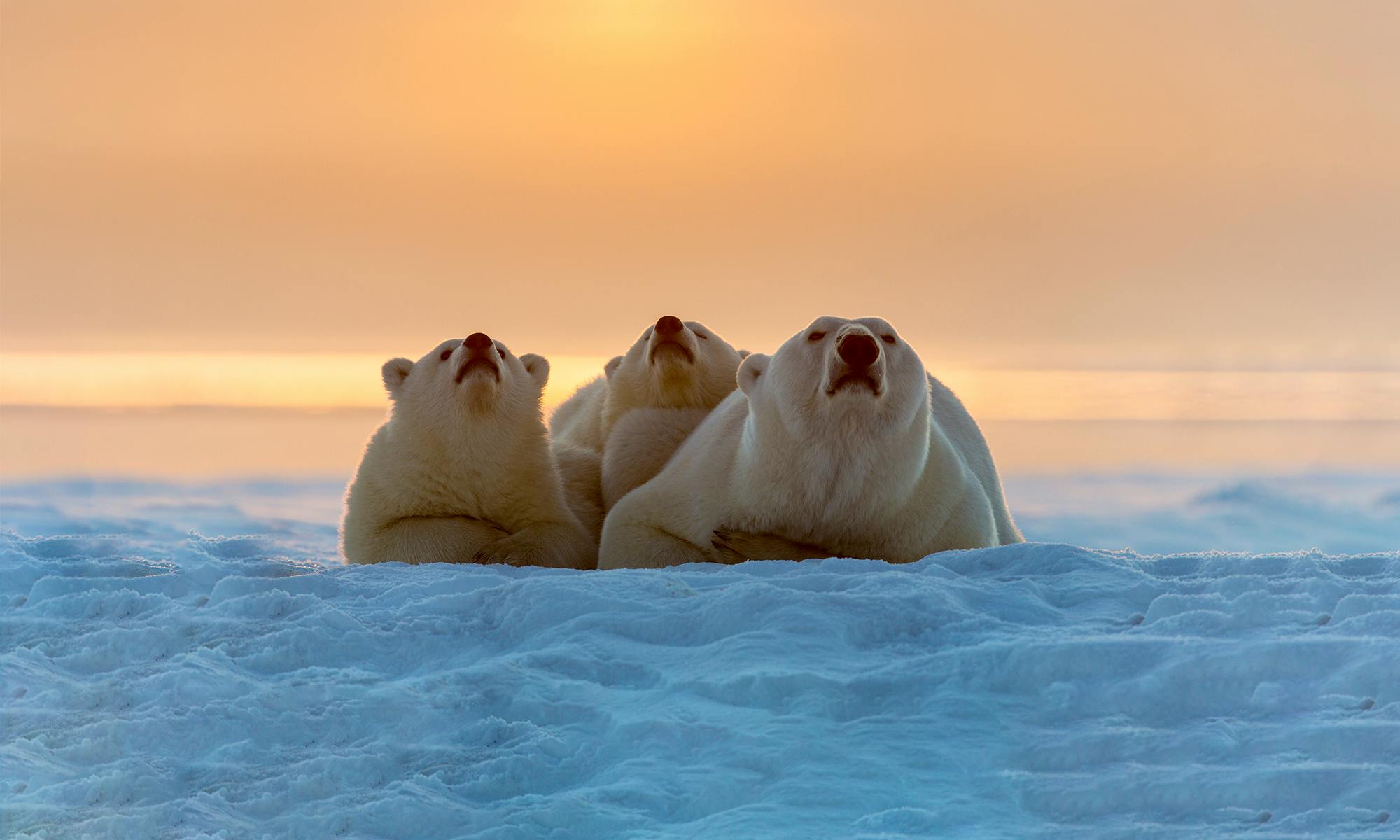
These great white bears are an icon of the Arctic. Many people feel a connection to polar bears, even if they’ve never seen one in person.
Why are polar bears imperiled?
You’ve probably seen images circulating on the internet of starving polar bears struggling to stand, let alone hunt and contend with the elements. Habitat loss, human disturbance and climate change are combining to overwhelm polar bears across their Arctic range. Alaska’s Arctic is rapidly overheating, experiencing the effects of climate change at twice the rate of the rest of the world, putting polar bears in Alaska at even greater risk.
The Arctic National Wildlife Refuge’s coastal plain is the most important land habitat for denning polar bears in the United States. 76% of the coastal plain is designated polar bear critical habitat. Yet that is precisely where devastating drilling for oil and gas is proposed to take place.
Polar bears are threatened by habitat loss, human disturbance and climate change.

Defenders' Impact
Defenders of Wildlife is fighting to protect vital polar bear habitat, including onshore polar bear critical habitat throughout the Alaskan Arctic. We are also advocating against proposed oil and gas development on the Arctic Refuge coastal plain, which is incompatible with conserving and recovering this listed species.
We are speaking up publicly and submitting detailed scientific comments about the plight of Alaskan polar bears and other imperiled Arctic wildlife. We recently won a lawsuit challenging a U.S. Fish and Wildlife Service regulation that underestimated the impacts of oil industry activities on polar bears in Alaska. Additionally, we have exposed the significant impacts that even exploring for oil would have on polar bears, let alone permanently industrializing their critical habitat. And we are working on the ground with the communities that live with polar bears to protect both people and bears by supporting the use of coexistence tools and approaches that reduce human-bear conflicts.
Around the country, we are fighting climate change by promoting wildlife-friendly renewable energy development and encouraging a reduction of carbon emissions. In response to warming, U.S. Geological Survey scientists, Alaska Native Science and Engineering Program students, Defenders of Wildlife staff and many others are engaged in studies to better understand the impacts to polar bears from loss of sea ice and identify the most effective tools for human-polar bear conflict reduction.
What You Can Do
Comment on any proposal that would harm polar bears or their habitat. Vote for leaders who believe climate change is real and support policy and funding allocations to address the climate crisis. Let your elected representatives know that public lands and waters, wildlife habitat, and endangered and threatened species are important to you as a constituent. Raise your voice in federal planning processes. Examine your own actions and choices to reduce emissions.
About
Polar bears are only found in the Arctic. The most important habitats for polar bears are the edges of pack ice where currents and wind interact, forming a continually melting and refreezing matrix of ice patches and leads (open spaces in the sea ice). Because of climate change, the Arctic Refuge coastal plain is becoming a more critical denning area with the decrease in sea ice.
Polar bears are listed as threatened throughout their global range. Alaska is home to two sub-populations of polar bears: the Southern Beaufort Sea population and the Chukchi Sea population. The Southern Beaufort Sea polar bears that reside in the Alaskan and Canadian Arctic are among the most imperiled of all populations, with only an estimated 900 bears remaining, a decrease of over 50% from earlier estimates.
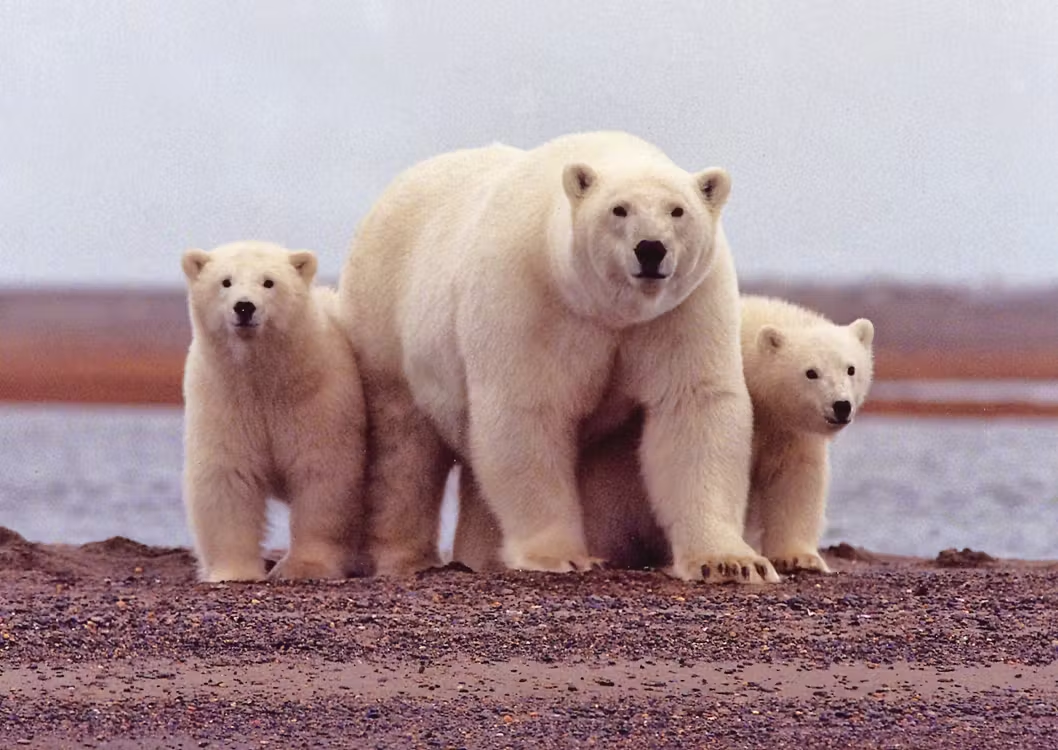
Polar bears are generally solitary as adults, except during breeding and cub rearing. Polar bears are strong swimmers. Individuals have been seen in open Arctic waters as far as 200 miles from land, although swimming long distances is not preferred since it requires so much energy for adults and can be fatal to younger bears.
Female polar bears, known as sows, give birth to usually one or two one-pound cubs and then nurse them until they reach about 20-30 pounds before emerging from the den in March or April. Cubs will remain with their mothers for a little over two years. Sows can produce five litters in their lifetime, one of the lowest reproductive rates of any mammal.
Mating Season: Late March - May
Gestation: About eight months with delayed implantation
Litter size: One to four cubs; though one or two cubs is most common
Polar bears feed almost exclusively on ringed seals and bearded seals, many stocks of which are also now listed under the Endangered Species Act. These bears are also known to eat walrus, beluga whale and bowhead whale carcasses, birds’ eggs and (rarely) vegetation.
News