

Join our mobile Rapid Response Network!
You can be the first to hear about how we’re going to hold this administration accountable and how you can fight back for wildlife!
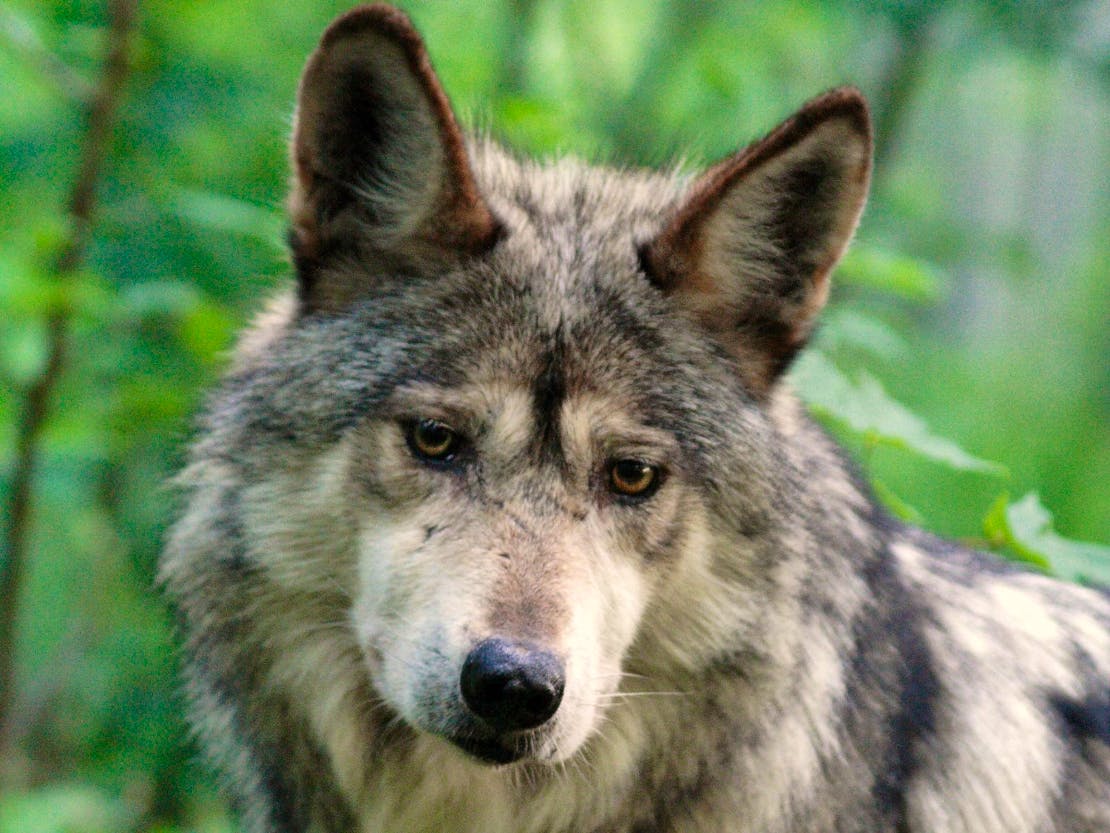
The Mexican gray wolf is a subspecies of the gray wolf, commonly referred to as “el lobo.”
They once ranged widely from central Mexico throughout the southwestern United States but today are only found in southeastern Arizona and southwestern New Mexico.
Why are Mexican gray wolves endangered?
Though they once numbered in the thousands, these wolves were wiped out in the U.S. by the mid-1980s, with just a handful existing in zoos. Throughout the early 1990’s, Defenders of Wildlife led a public campaign supporting reintroduction. In 1998, the U.S. Fish and Wildlife Service, released 11 Mexican gray wolves back into the wild in Arizona.
Although their numbers have grown slowly, they remain one of the most endangered subspecies of wolf in the world because of compromised genetics, human intolerance and reluctance to release more individuals and bonded pairs to the wild.
Humans pose the greatest threat because of intolerance and misconceptions about Mexican gray wolves. The genetic diversity of Mexican gray wolves also needs careful monitoring and improvement because inbreeding is a serious threat in the wild.
Defenders' Impact
Defenders has played a key role in Mexican gray wolves’ recovery. Rodger Schlickeisen, who served as President of Defenders from 1990 to 2011, joined Jamie Clark, who was the Director of FWS and then President of Defenders from 2011 to 2024, in carrying the first wolves into their release pens in 1998. Defenders also sponsored wolf technicians to camp near the wolves during their acclimation to increase security and provide management support.
Today, we continue to support scientists and policymakers to find the best path forward, including supporting adult releases and cross-fostering of pups. We also continue to sponsor field technicians to work alongside agency biologists in the field.
Defenders’ field program provides support to tribal members and Mexican biologists, helping them gain experience to support wolf recovery efforts on tribal lands and in Mexico. We collaborate with ranchers and tribal members in high-conflict areas to minimize conflict and promote coexistence. This includes employing range riders to monitor livestock, relocating livestock away from wolf dens, installing special fencing and more.
We also work with regional agencies and decision-making bodies to ensure successful coexistence programs receive matching public funding and can be replicated, extending the benefits to new areas in support of a growing wolf population.
You can be a part of the solution for endangered species: support our efforts to protect the wild!
What You Can Do
Speak up for wolves and the continued support of endangered species protections, like the Endangered Species Act.

About
Mexican gray wolves once ranged widely from central Mexico throughout the southwestern U.S. including Utah, Colorado and Texas. Today, they can be found only in southeastern Arizona and southwestern New Mexico. Mexican gray wolves are also being reintroduced in Mexico. They prefer mountain forests, grasslands and scrublands.
In 2023 there were 257 individual wolves with a minimum of 26 breeding pairs in the wild in Arizona and New Mexico.
Mexican gray wolves are very social animals. They live in packs, which are complex social structures that include the breeding adult pair (the alpha male and female) and their offspring. A hierarchy of dominant and subordinate animals within the pack help it to work as a unit.
Packs care for the pups until they mature at about 10 months of age.
Mating Season: Mid-February to mid-March
Gestation: 63 days
Litter size: 4-7 pups
Mexican gray wolves mostly eat ungulates (large hoofed mammals) like elk, white-tailed deer and mule deer. They are also known to eat smaller mammals like javelinas, rabbits, ground squirrels and mice.
Featured

Coexisting with Mexican Gray Wolves
As part of our mission to protect and restore native wildlife and plants in their natural communities, Defenders of Wildlife works to save one of the world’s rarest land mammals, the Mexican Gray Wolf.
Read More About the Mexican Gray Wolf
News


