
Join our mobile Rapid Response Network!
You can be the first to hear about how we’re going to hold this administration accountable and how you can fight back for wildlife!
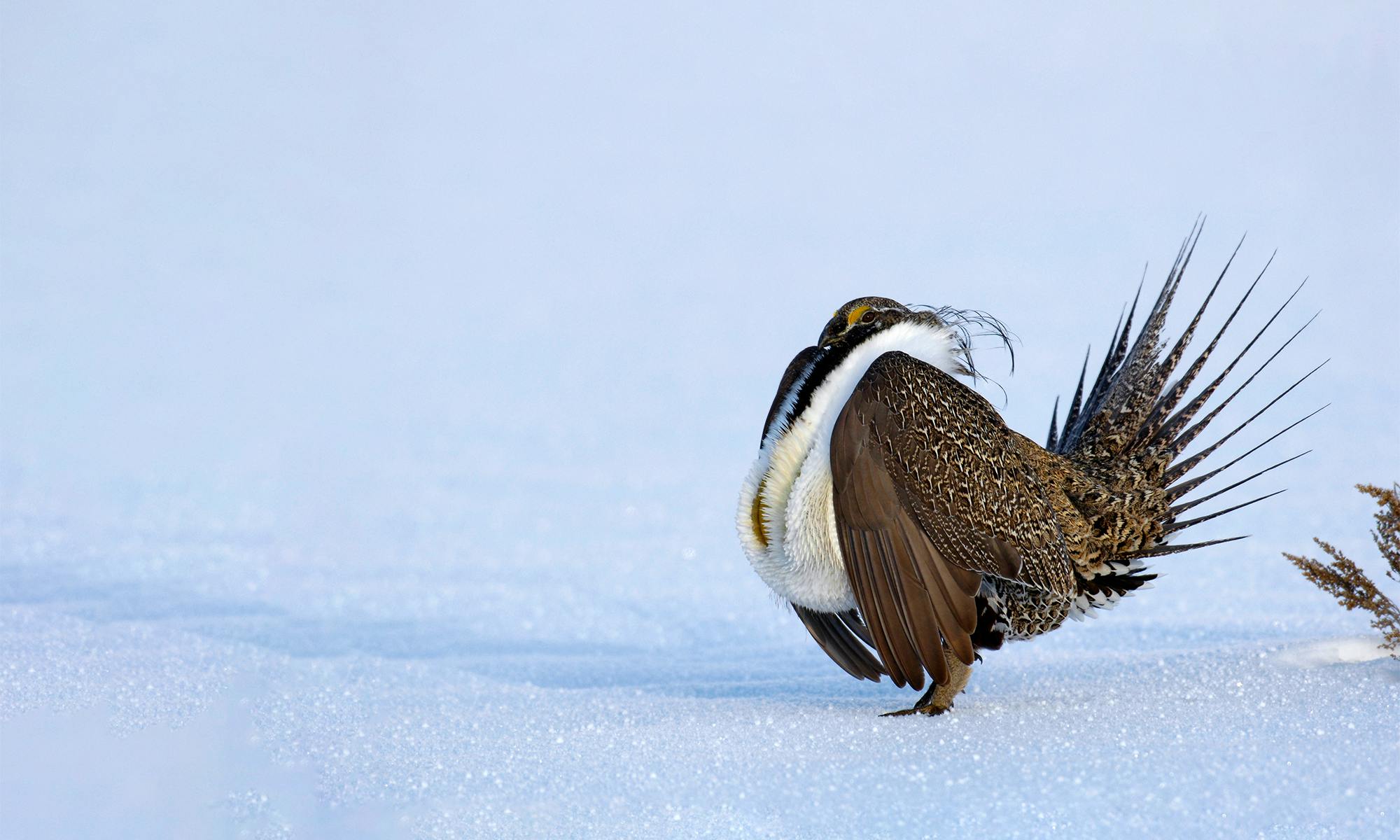
Greater sage-grouse and Gunnison sage-grouse are closely related species. They live in the Sagebrush Sea, an ecoregion that blankets much of the interior west and supports hundreds of species of at-risk plants and animals.
Sage-grouse need large expanses of healthy sagebrush grasslands, riparian areas and wet meadows to survive and flourish. Conserving sage-grouse benefits a host of other species in the Sagebrush Sea, including pronghorn, elk, mule deer, native trout, pygmy rabbit, and nearly 200 migratory and resident bird species.
Why are sage-grouse imperiled?
Both the Gunnison sage-grouse and the greater sage-grouse are trending toward extinction.
Currently, there are likely 4,000 or less Gunnison sage-grouse left. They are facing a very uncertain future in western Colorado and southeastern Utah where development (energy and residential) and climate change are altering habitat.
While the greater sage-grouse still occur across much of the northern interior west, its populations continue to decline. A recent US Geological Survey study found that the Greater sage-grouse has declined 80% since 1965 and nearly 40% since 2002 and the downward trend is forecast to continue absent stronger conservation.
More than half of the Sagebrush Sea natural habitats have been lost to development and agriculture. Currently, only about 14% of intact sagebrush habitat remain, and we continue to lose on average over one million acres of sagebrush habitat each year to a combination of fires, invasive species, drought, energy development, mining, transmission and roads.
Habitat loss and fragmentation, climate change, invasive species, energy development, unnatural fire and livestock grazing.
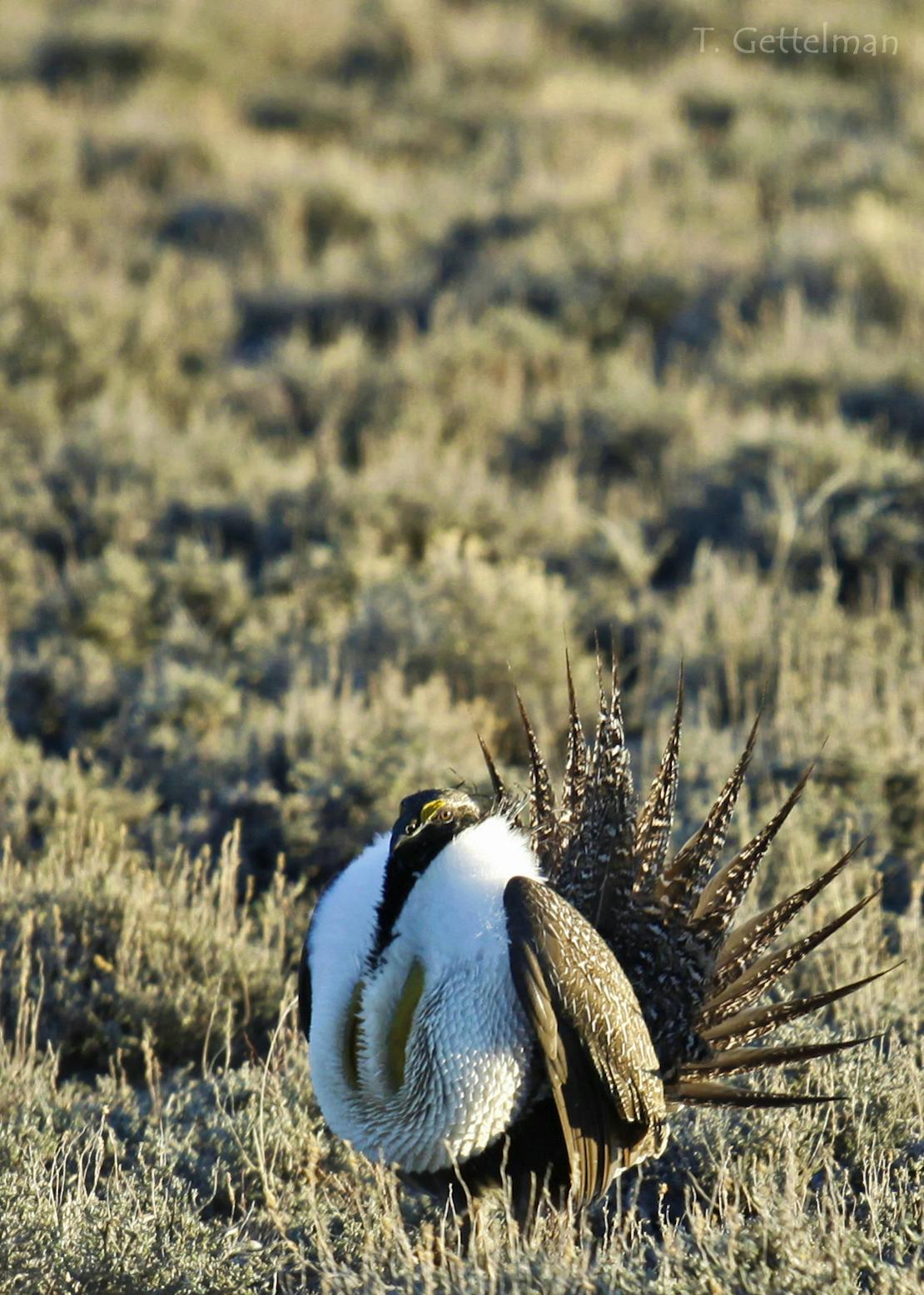
greater sage-grouse
Gunnison sage-grouse
greater sage-grouse
Gunnison sage-grouse
Defenders' Impact
Defenders is working to ensure that federal agencies and western states implement conservation measures to restore these magnificent birds and the Sagebrush Sea ecosystems on which they depend and prevent further habitat destruction in crucial habitats like mating grounds.
Defenders participated in multiple rounds of federal sage-grouse planning efforts over the last decade. We designed and submitted for consideration a proposal to conserve a network of Sagebrush Sea “Areas of Critical Environmental Concern.” We continue to promote the protection of crucial habitats and oppose oil and gas and other damaging activities in those habitats.
What You Can Do
Hold federal agencies, states and local jurisdictions accountable for conserving sage-grouse species through land protections and conservation measures designed to address threats. Remove fences and mark remaining fences with highly visible flags to help prevent sage-grouse from colliding with them. Manage your land through conservation easements.

About
Greater sage-grouse are a widely distributed but sparsely populated species that occur in Oregon, Idaho, Nevada, Montana, Wyoming, Utah and Colorado, with remnant populations in Washington, California, North Dakota, South Dakota, Alberta and Saskatchewan. Gunnison sage-grouse range is limited to southwestern Colorado and southeastern Utah.
The total population of greater sage-grouse is estimated around 200,000, while there are less than 4,000 Gunnison sage-grouse remaining.
Sage-grouse use different seasonal habitats over the during the course of the year, with some populations moving up to 100 miles between spring, summer, autumn and winter habitat areas.
The sage-grouse mating ritual is fascinating to observe and often described as among the most stirring and colorful natural history pageants in the West. In early spring, at dawn and often at dusk, sage-grouse congregate on "leks"—ancestral strutting grounds to which the birds return year after year. Leks vary in size from one to 40 acres and may be up to 50 miles from the birds’ winter habitat. To attract a hen, cocks strut, fan their tail feathers and swell their breasts to reveal yellow air sacs. The combination of wing movements and inflating and deflating air sacs make an utterly unique "swish-swish-coo-oopoink!"
Sage-grouse feed on wildflowers and insects in spring and summer. They depend on sagebrush for food year-round, especially in winter when sagebrush is the only available food source.
Featured

Learn Your Sage-grouse: Greater vs. Gunnison
Read on for five key differences between Greater and Gunnison sage grouse.
Read More About the Sage-Grouse
News


